What Will You Actually Learn on a Wildlife Photography Workshop?
One of the questions photographers should ask before spending thousands of dollars on a wildlife photography workshop is surprisingly simple:
What am I actually going to learn?
Not where are we going?
Not what animals might we photograph?
Not how nice is the lodge?
Those things matter.
But if you are signing up for a photography workshop, there should be teaching.
I've been leading photography workshops around the world since 2012, and my philosophy has remained pretty simple:
I want you to leave a better photographer than when you arrived.
The photographs you bring home are important.
The skills you bring home are even more important.
Here is what that looks like in the field.
First, I Need to Understand How You Photograph
I don't begin a workshop expecting everyone to have the same level of experience.
That would be unrealistic.
One photographer may have purchased their first serious camera six months ago.
Another may have been photographing wildlife for twenty years.
One person may want to finally understand autofocus.
Another may want help creating less conventional compositions.
That's why I spend time getting to know each photographer.
What do you struggle with?
What do you want to improve?
What kind of photographs do you want to make?
The answers determine how I teach you.
Photography instruction should never feel like an instructor standing in front of ten people giving everyone the same lecture.
Most of the meaningful learning happens while we're standing beside each other with cameras in our hands.
Learning to Control Your Camera Without Missing the Moment
Wildlife photography can become chaotic quickly.
You may be sitting quietly watching an animal doing absolutely nothing.
Then everything happens in three seconds.
Your camera needs to be ready before those three seconds begin.
That means learning how to make technical decisions quickly.
We work on shutter speed, aperture, ISO, autofocus modes, focus areas, exposure compensation and frame rates.
But I don't want photographers simply memorizing settings.
I want you to understand why you're changing them.
If an elephant is slowly walking across an open plain, your camera requirements are different than when an eagle suddenly launches from a branch.
If an animal moves from bright sunlight into deep shade, you need to recognize what has happened and respond without staring at the back of your camera while the action continues.
The objective is to make camera operation instinctive enough that your attention stays on the wildlife.
Learning to Anticipate Instead of React
This may be one of the most important wildlife photography skills I teach.
Beginners often photograph what an animal is doing.
Experienced wildlife photographers begin thinking about what the animal might do next.
That changes everything.
You start watching body language.
You notice where an animal is looking.
You watch interactions between individuals.
You consider where the subject may move and what the background will look like if it gets there.
Then you prepare.
Maybe that means increasing your shutter speed.
Maybe it means changing orientation.
Maybe it means moving the vehicle a few metres.
Maybe it means doing absolutely nothing and waiting.
Wildlife photography rewards patience much more often than panic.
Learning to See the Background
Photographers naturally concentrate on the animal.
I understand why.
There is a leopard sitting ten metres away. Nobody is initially thinking about the shrub behind its head.
But eventually you need to.
One of the most common things you'll hear me discussing in the field is the background.
Move left.
Get lower.
Wait until the animal takes another step.
Don't photograph yet.
There is a branch cutting through the subject.
Sometimes moving a few inches completely changes the photograph.
This is one of the reasons I value small groups. Photographers need room to adjust position rather than being locked into one spot.
The animal may be the subject.
The background is what allows the viewer to really see it.
Learning to Photograph Light, Not Just Wildlife
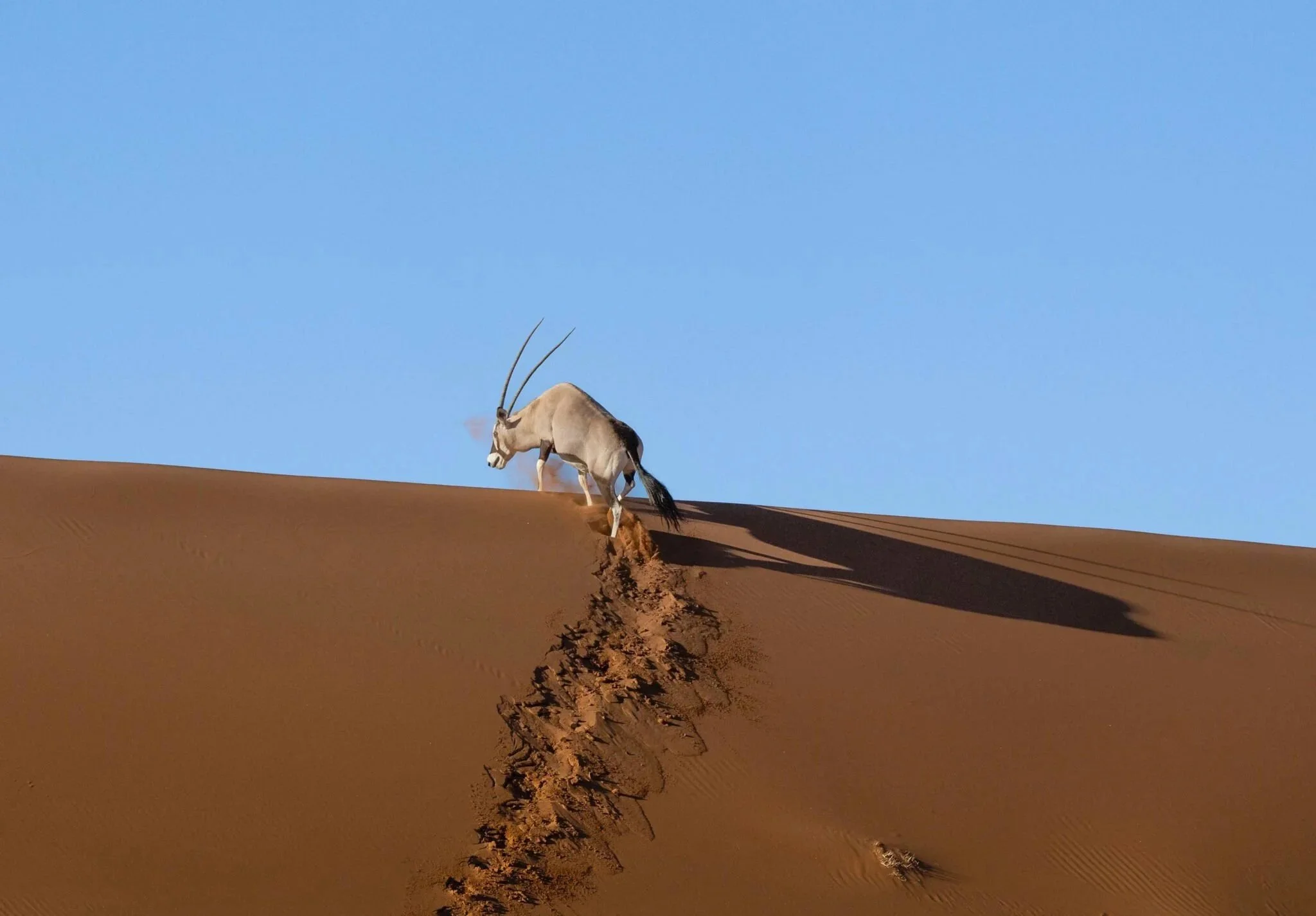
Photography has always been about light.
An extraordinary animal in poor light can produce an ordinary photograph.
A common animal in extraordinary light can produce something memorable.
I want photographers to recognize those opportunities.
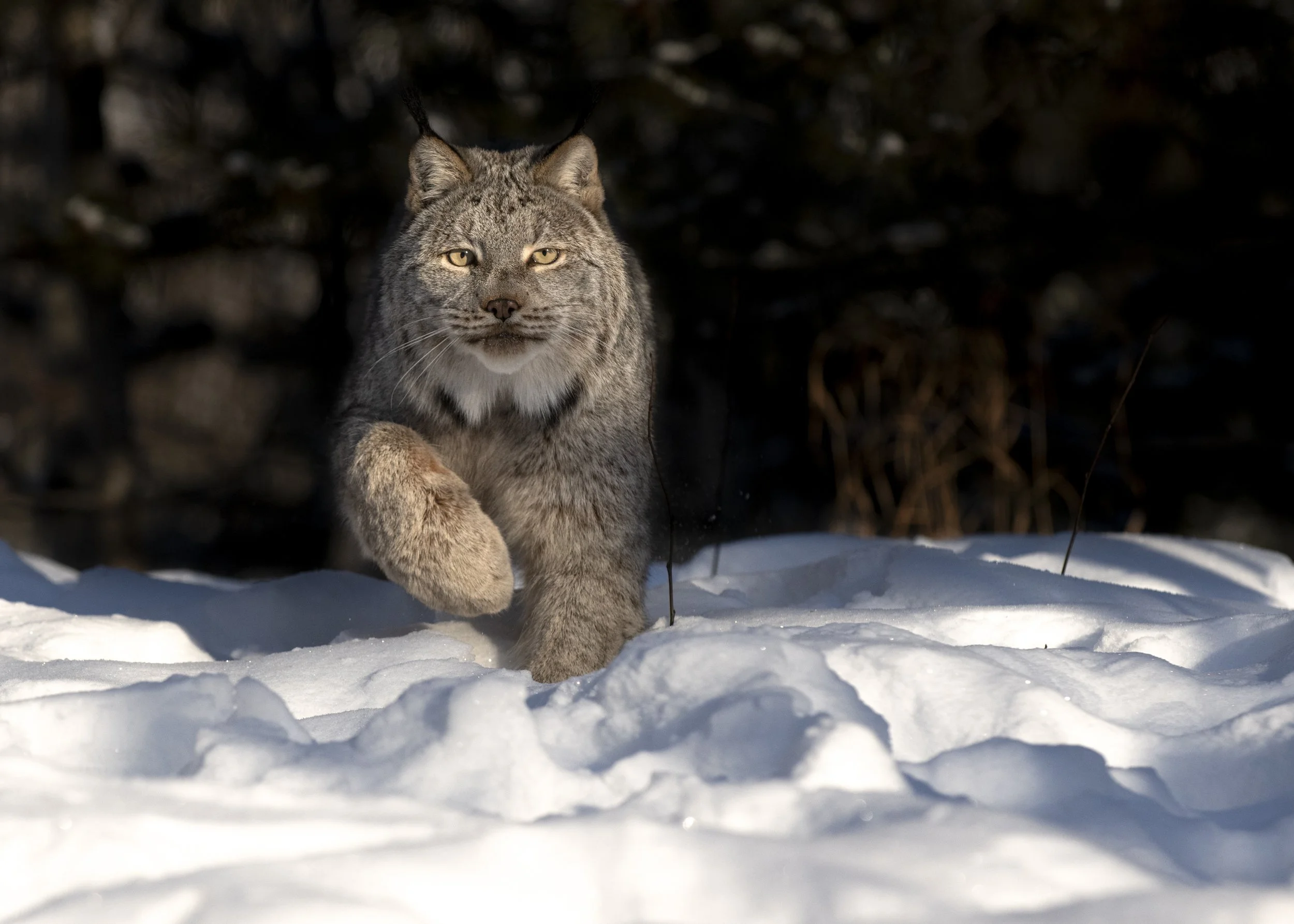
We talk about the direction of light.
Backlighting.
Side lighting.
Rim light.
Silhouettes.
High-key and low-key situations.
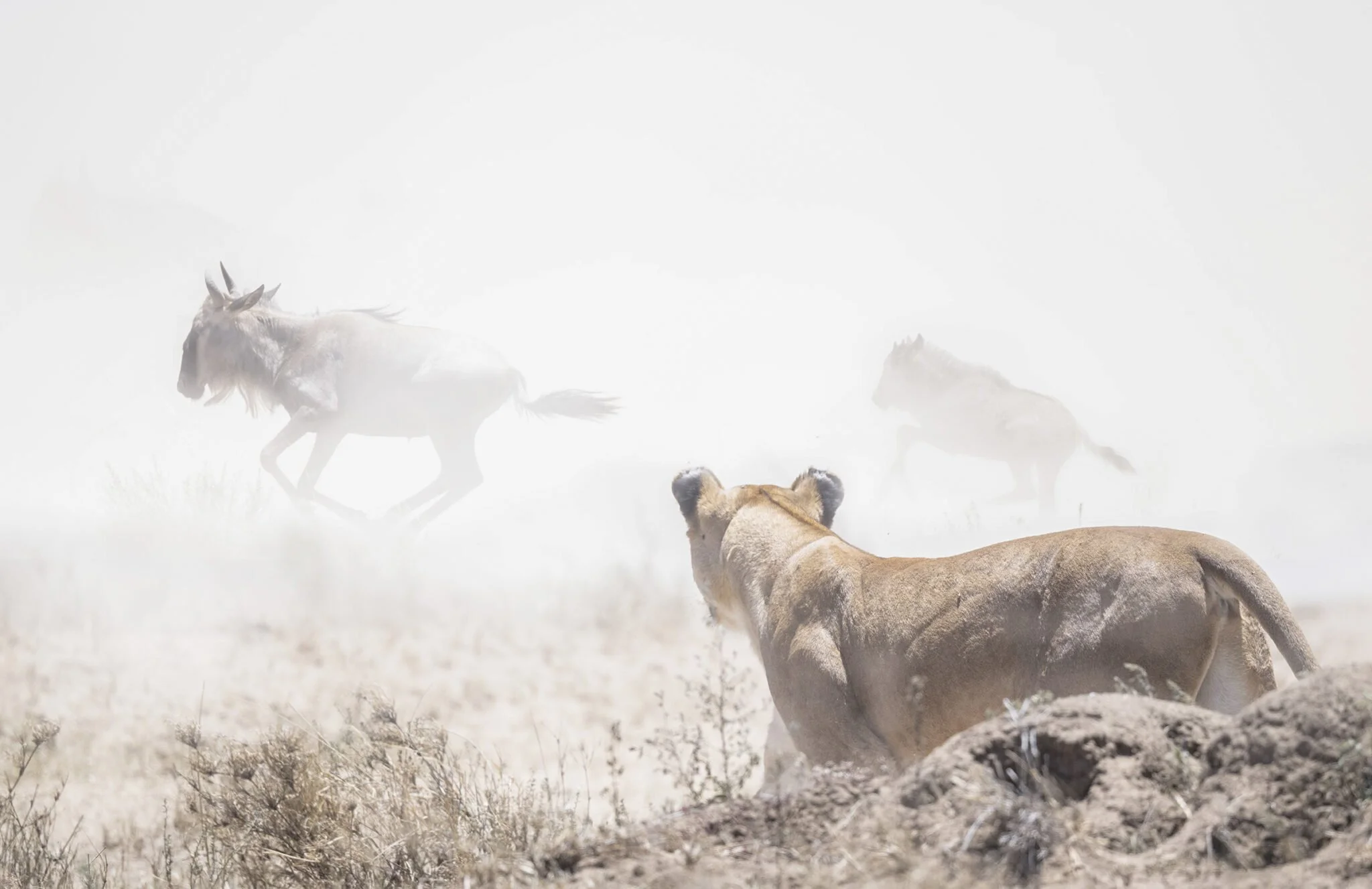
How light interacts with dust, snow, rain and breath.
And sometimes we discuss when the best decision is to put the camera down for ten minutes and wait for the situation to improve.
Great wildlife photography isn't always about getting closer.
Sometimes it's about waiting for the light to reach the animal.
Learning When to Go Wider
There is a stage almost every wildlife photographer goes through.
We buy the longest lens we can afford.
Then we try to fill every pixel with the animal.
I understand the temptation.
I did it too.
But some of my favourite wildlife photographs show the animal as part of a much larger environment.
A small elephant beneath an enormous African sky.
A polar bear surrounded by ice.
An eagle hunter riding through the landscape of western Mongolia.
A lion almost disappearing into tall grass.
These photographs tell you something about where the animal lives.
That's why environmental wildlife photography is an important part of what I teach.
Sometimes the strongest decision you can make is to zoom out.

Learning Composition in Real Time
Wildlife rarely walks onto the perfect third of your frame and waits patiently while you compose.
You have to make decisions quickly.
Where should the animal sit within the frame?
How much room should you leave in the direction it is looking?
Should the image be horizontal or vertical?
Does the landscape add to the photograph?
Are there distracting highlights?
Does the photograph need to be tighter—or much wider?
There isn't always one correct answer.
That's where photography becomes interesting.
My job isn't to tell you there is one composition you must make.
My job is to help you see the options.
Learning From Your Own Photographs
One of the fastest ways to improve is to study what you just photographed.
Not simply deciding whether an image is sharp.
Look deeper.
Why does one frame feel stronger than another?
What happened to the background?
Was the shutter speed high enough?
Did you clip important highlights?
Was there a better moment three frames later?
Could the composition be simplified?
Image review and discussion can turn a wildlife encounter into a lesson you remember for years.
That is much more useful than simply deleting everything that isn't a five-star image.
Your mistakes are excellent teachers.
They're also considerably cheaper than buying another lens.
Learning to Be Ready Before Something Happens
When I arrive at a wildlife location, I am already thinking.
Where is the light?
What is the background?
What wildlife might appear?
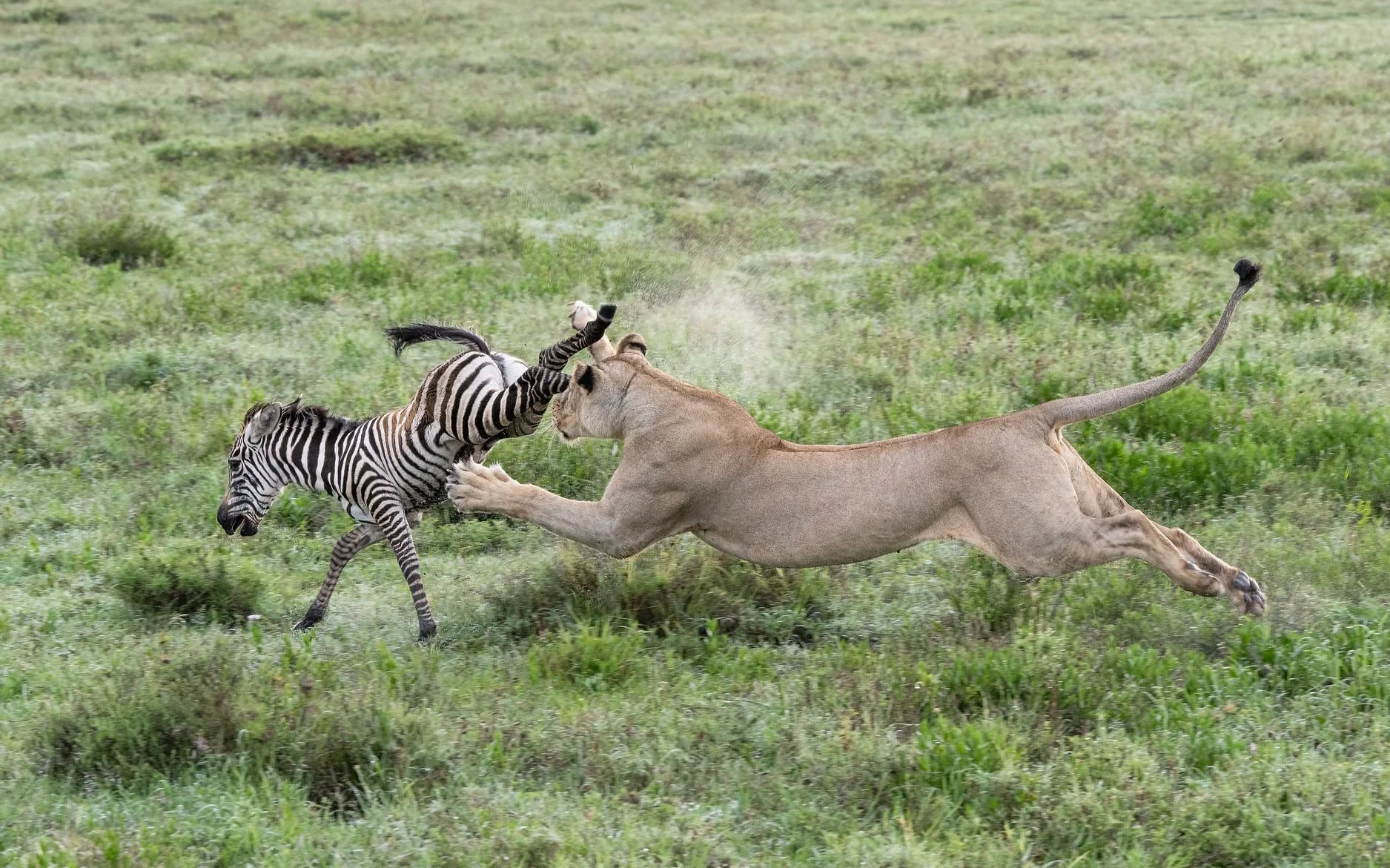
What shutter speed would I need if something suddenly started running or flying?
Where could the subject move?
Where would I want the vehicle positioned?
That preparation comes from years in the field.
I try to teach photographers that same thought process.
You cannot control wildlife.
You can control how prepared you are when wildlife gives you an opportunity.
That distinction matters.
Why Experience Leading Workshops Matters
I've been teaching photography workshops internationally for more than a decade.
During that time I have watched an enormous range of situations unfold.
Great light.
Terrible light.
Wildlife that cooperated beyond anything we could have hoped for.
Wildlife that apparently had other appointments.
Weather that destroyed Plan A before breakfast.
Those experiences accumulate.
You begin to recognize situations earlier.
You develop backup plans.
You understand where photographers need to be.
You also learn that different photographers need different things from you.
That may be the most important part.
My role is not simply to know how I would photograph something.
My role is to help you figure out how you should photograph it.
Your Photographs Come Before Mine
There is one principle that probably defines my approach to workshops more than anything else.
When I am leading a workshop, your photographs are more important than mine.
Sometimes I photograph.
Sometimes I don't.
If the group needs help, my camera stays down.
I'd rather make sure you have the right shutter speed before the action begins.
I'd rather notice the photographer on the other side of the vehicle has a branch directly behind the animal.
I'd rather help someone understand why their autofocus isn't behaving the way they expected.
I've had plenty of opportunities to make photographs over the years.
When you're traveling with me, I want to help create yours.
What Should You Take Home From a Wildlife Photography Workshop?
Of course I want you returning with photographs you're proud to show people.
That's part of why we travel to these extraordinary places.
But eventually those files will be processed and printed.
What stays with you is what you learned.
I want you to return home and notice backgrounds you previously ignored.
I want you changing camera settings before the action begins.
I want you looking at an animal's behaviour and thinking about what might happen next.
I want you recognizing great light.
I want you experimenting with wider compositions.
Most importantly, I want you feeling more confident when you're photographing without me standing beside you.
Because that's how I measure whether I've done my job.
A successful wildlife photography workshop shouldn't just give you better photographs for a week.
It should make you a better wildlife photographer for years.
Ready to Put This Into Practice?
Reading about wildlife photography can only take you so far.
Eventually you have to be standing there when the light changes, when the animal starts moving and when you suddenly have three seconds to make all the decisions we've been talking about.
That is where a workshop becomes valuable.
If you want to improve your wildlife photography while experiencing some of the world's great wildlife destinations, I invite you to join me on one of my upcoming workshops.
We keep the groups small. We put photography first. We spend time teaching in the field. And I will be there beside you helping you understand not only what settings to use, but why you are using them.
You don't have to arrive as an expert.
You just need to arrive wanting to become better.
Take a look at my upcoming wildlife photography workshops and find the experience that speaks to you.
Then bring your camera.
We'll work on the rest together.