Small-Group Namibia Photography Tours and Workshops
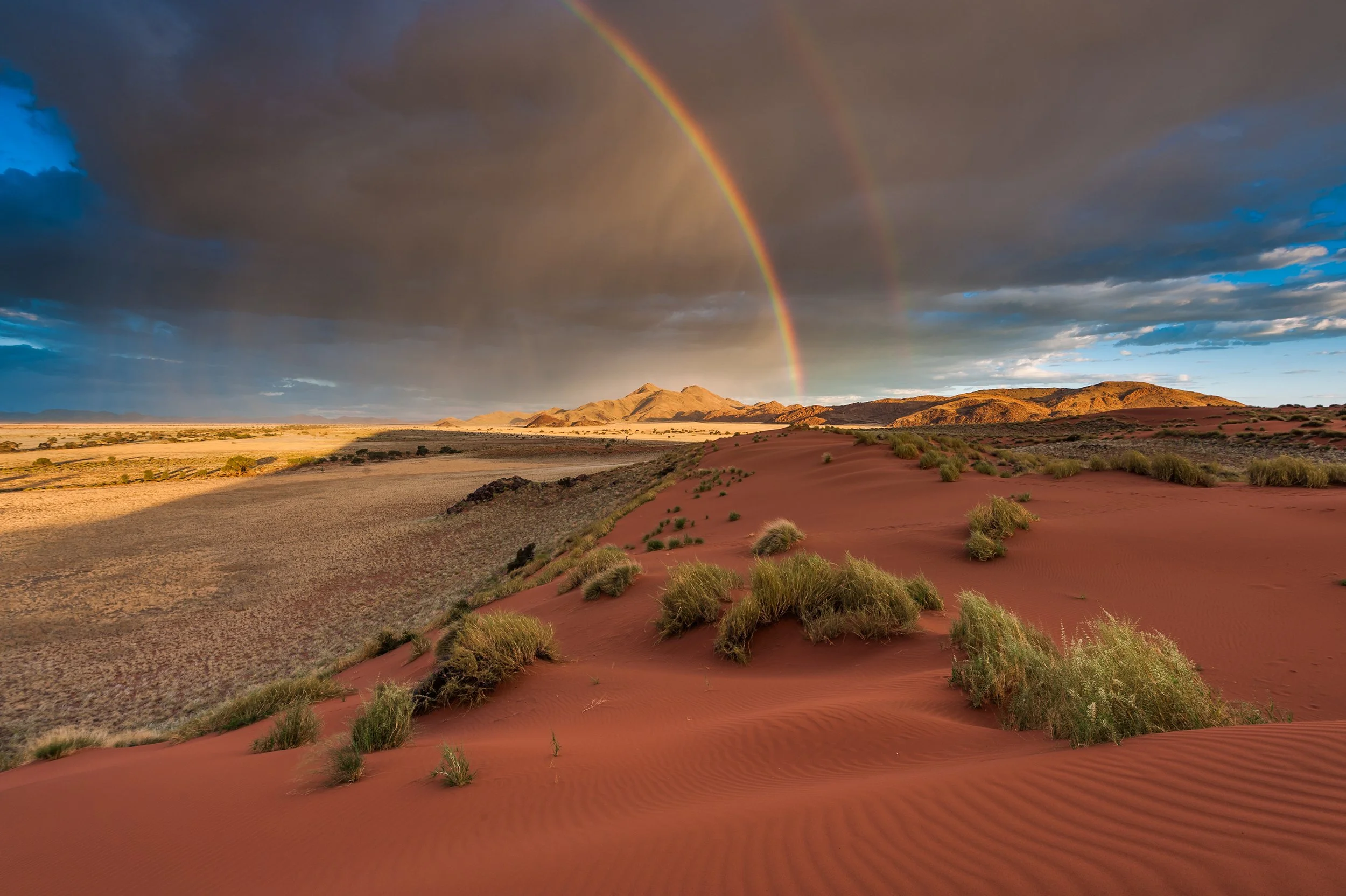
For more than a decade, I have led photographers through Deadvlei, Kolmanskop, Spitzkoppe, Etosha, Ongava and the Quiver Tree Forest. Our groups are limited to four or five photographers, giving everyone room to work, direct instruction and more freedom when the light is at its best.
I have led more than ten photo workshops in Namibia, taking photographers through the sand-filled ghost town of Kolmanskop, wildlife in Ongava and Etosha, the ancient clay pans of Deadvlei, the vast desert landscapes of Sossusvlei, and some of the darkest night skies in Africa in areas such as Spitzkoppe and the Quiver Tree Forest.
I lead these workshops through Akari Photo Tours, the photo workshop company I co-own. Years of scouting, teaching and working with trusted local guides allow us to place photographers in the right locations when the light, wildlife and conditions are at their best—from sunrise at Deadvlei and environmental portraits with Himba communities to the Milky Way over Spitzkoppe and wildlife across Etosha and Ongava.
With groups limited to just four or five photographers, you will have more room to work, more individual instruction and more time focused on creating the photographs you travelled to Namibia to make.
Book Your Namibia photo Workshop with confidence

Namibia Flying Safari Photo Workshop with AKARI PHOTO TOURS
14 days | from $20,995 USD | group size 4 | activity level: easy
This Namibia Flying Safari is built for a small-group photography adventure that combines wildlife, desert landscapes, night skies, ghost towns, and aerial photography.
Dates: Aug 13–26, 2028
Best for: photographers who want to capture wildlife, aerial photos, landscapes, and night skies in one trip.
Namibia Safari Photo Workshop with AKARI PHOTO TOURS
13 days | from $13,995 USD | group size 5 | activity level: easy
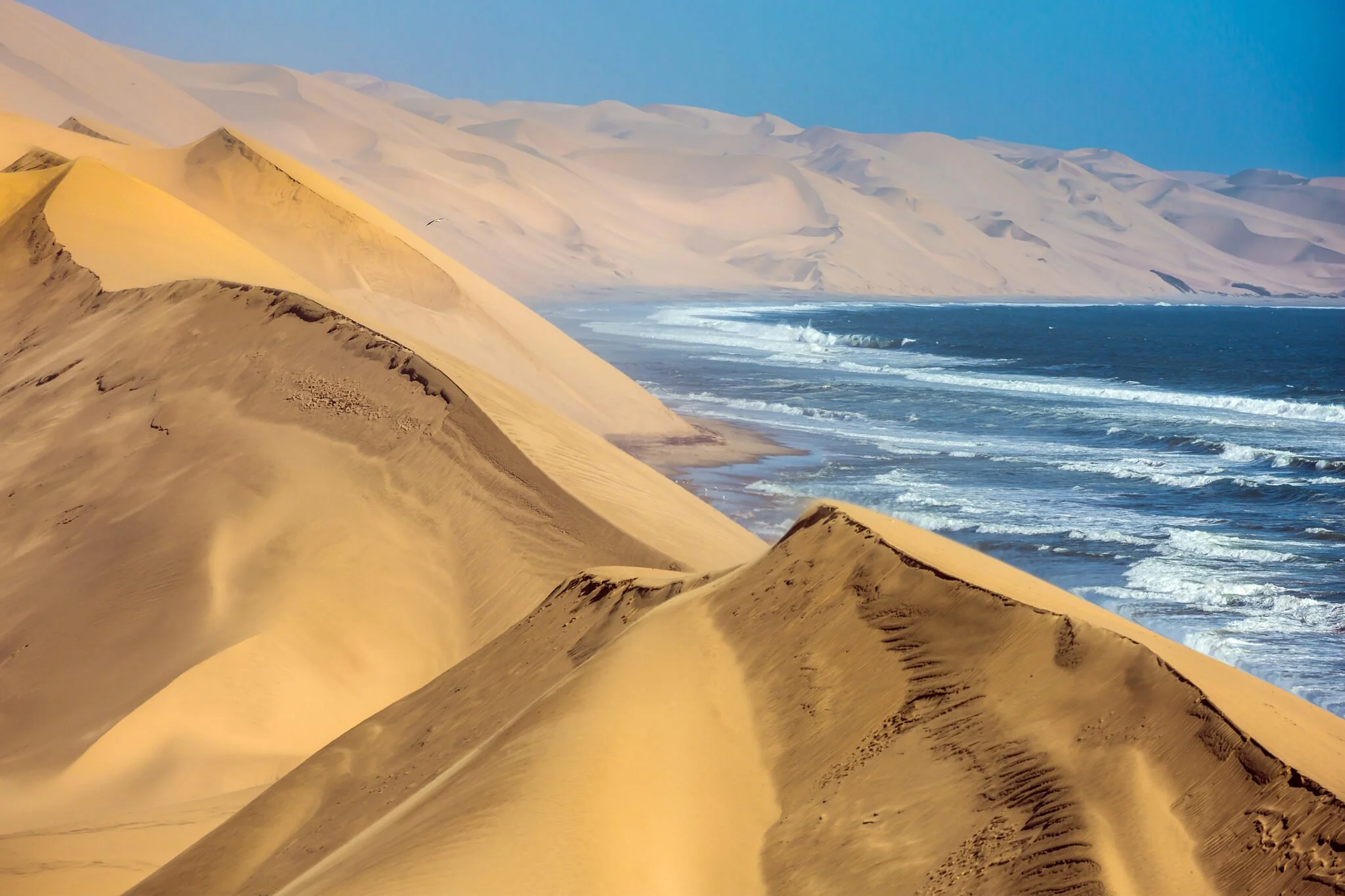
This is Namibia with the full menu: Etosha + Ongava wildlife, dunes, Sossusvlei, Spitskoppe, Deadvlei dawns, Sandwich Harbour dunes, Kolmanskop done right, and night sky sessions in Quiver Tree Forest where the desert goes quiet.
Dates: Aug 18–30, 2027
Best for: photographers who want to capture wildlife, landscapes, and night skies in one trip.
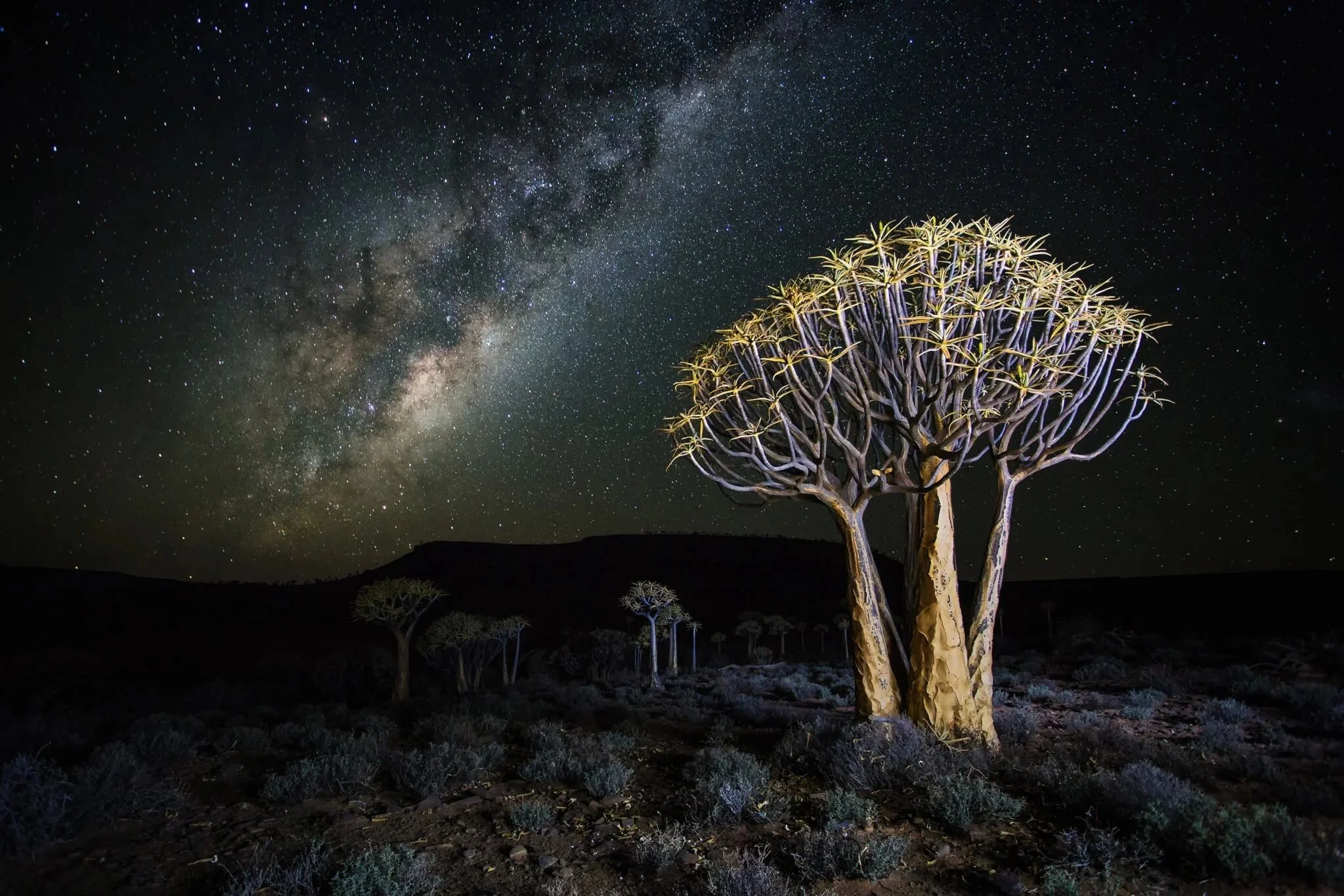
Namibia Night Sky Photo Workshop WITH AKARI PHOTO TOURS
11 days | from $9,995 USD | group size 5 | activity level: easy
Built for photographers who want to chase the Milky Way across Namibia—quiver trees, dunes, and ghost towns—timed around the new moon for darker skies at Spitzkoppe.
Dates: May 27–Jun 6, 2027 and Jun 26–Jul 6, 2027
Best for: photographers who want night skies, a desert landscape, and composition time.
Still unsure What Trip Is Right For You? Ask Us Which Trip Fits You Perfectly. Contact us here
Take a look at What You Will PhotoGraph on our Namibia Photography Workshops

Deadvlei and Sossusvlei - otherworldly landscapes
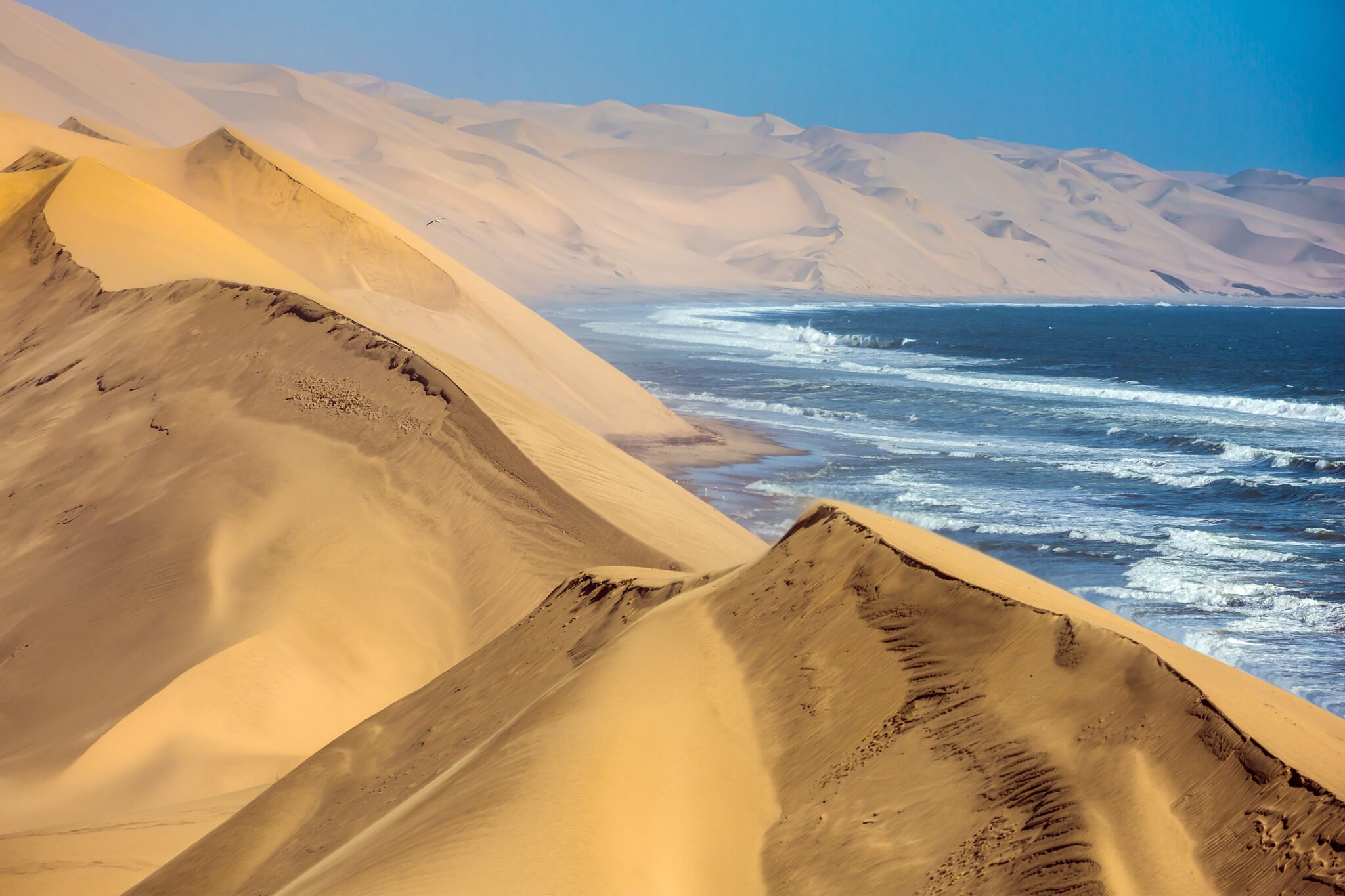
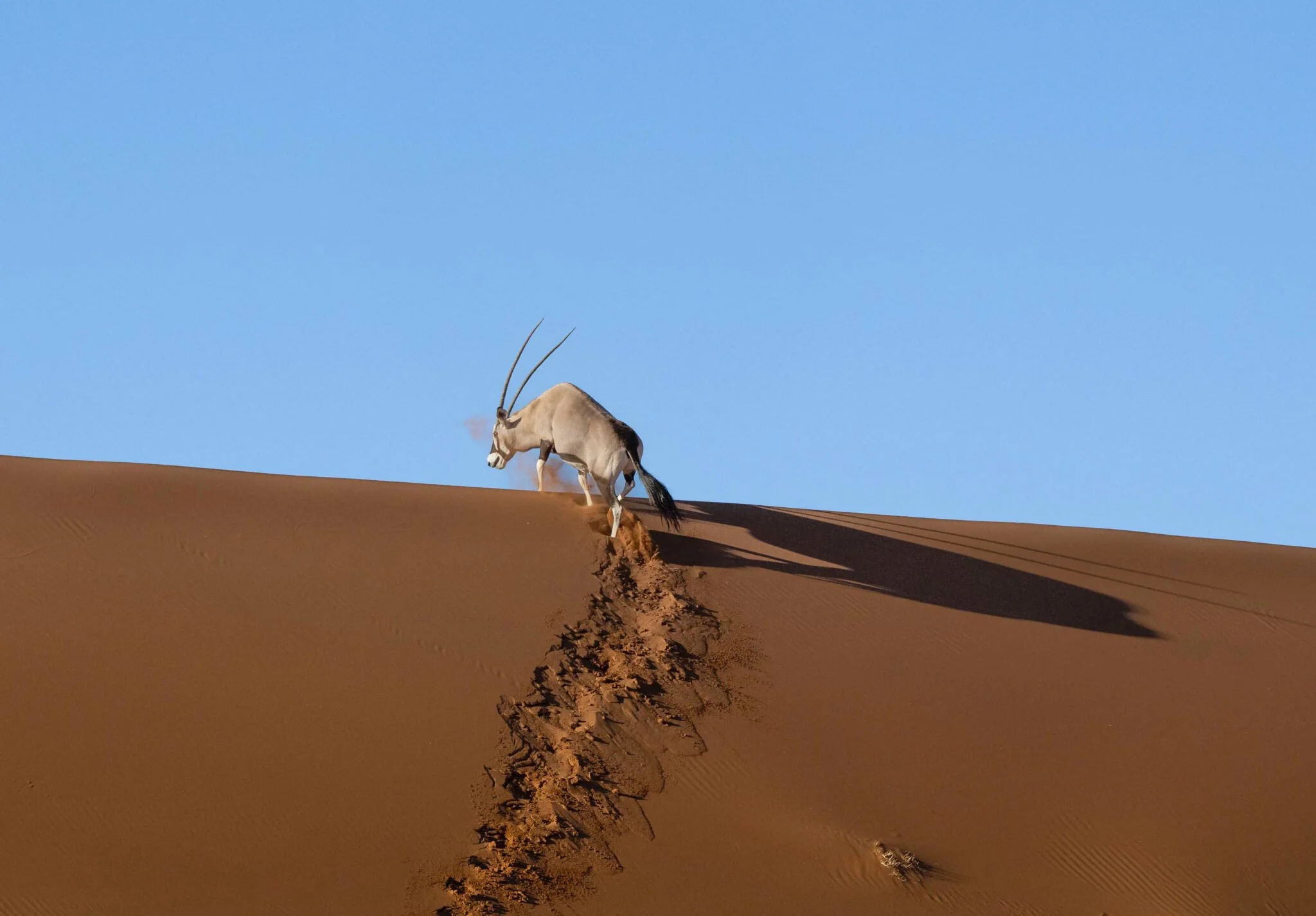
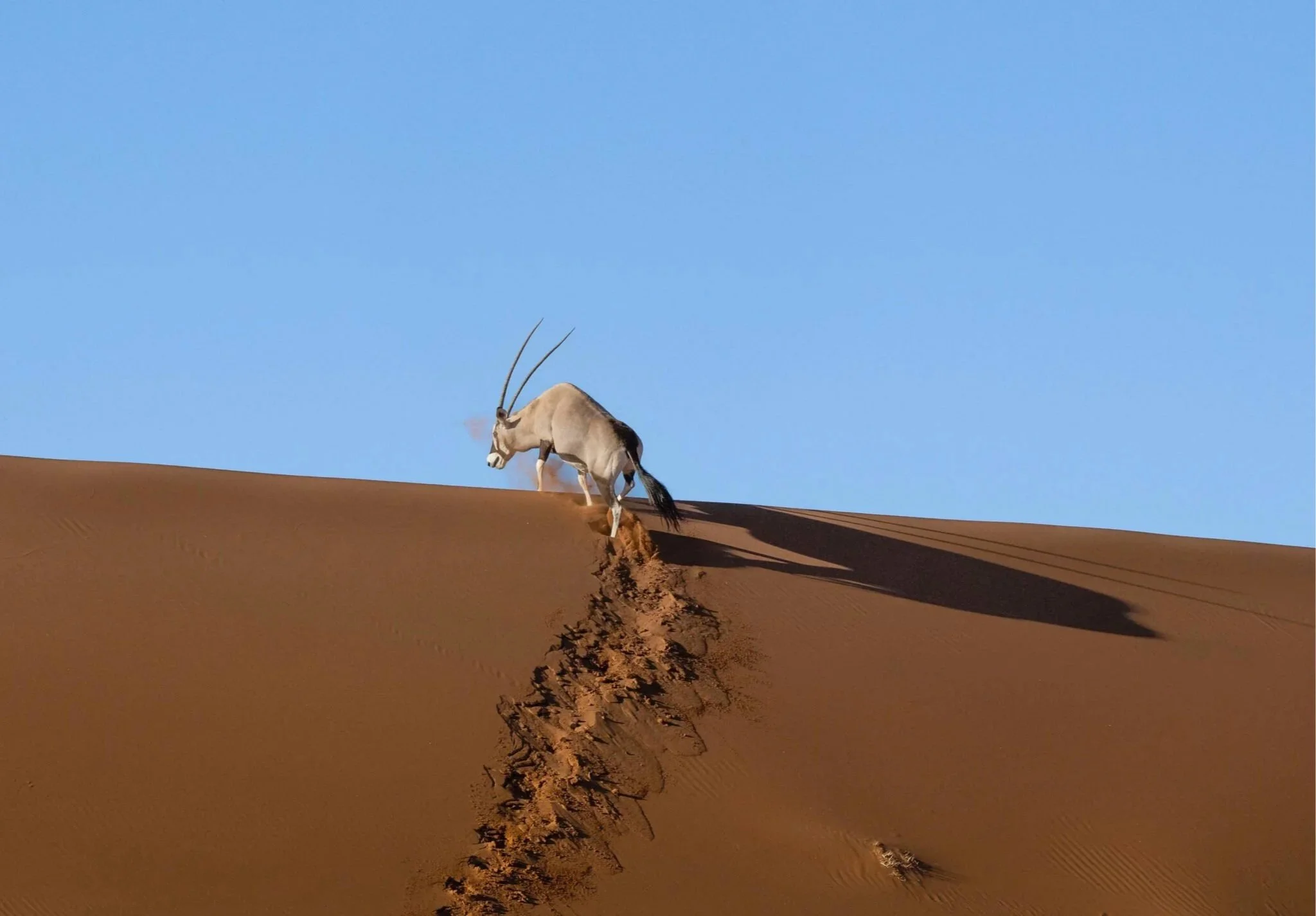
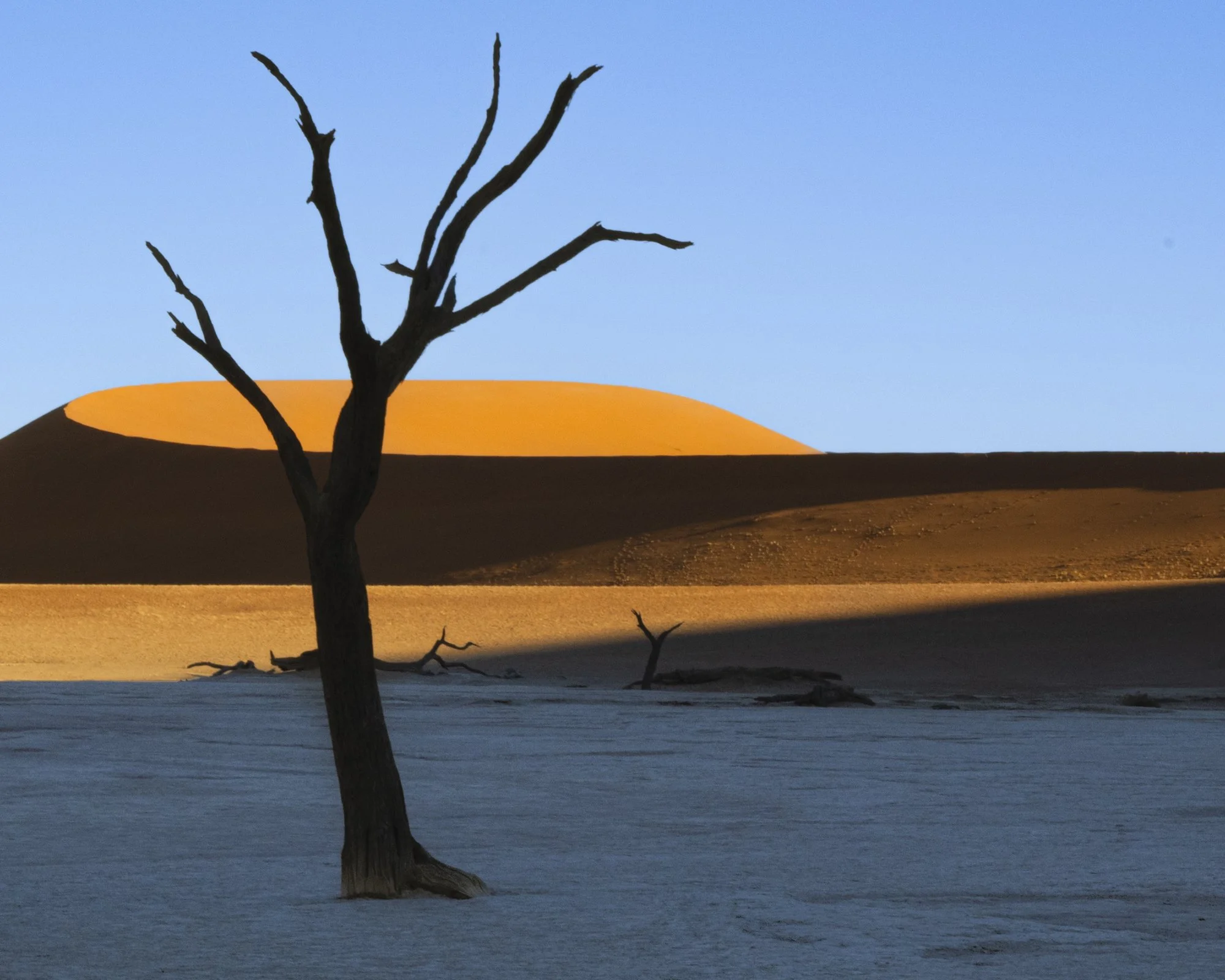
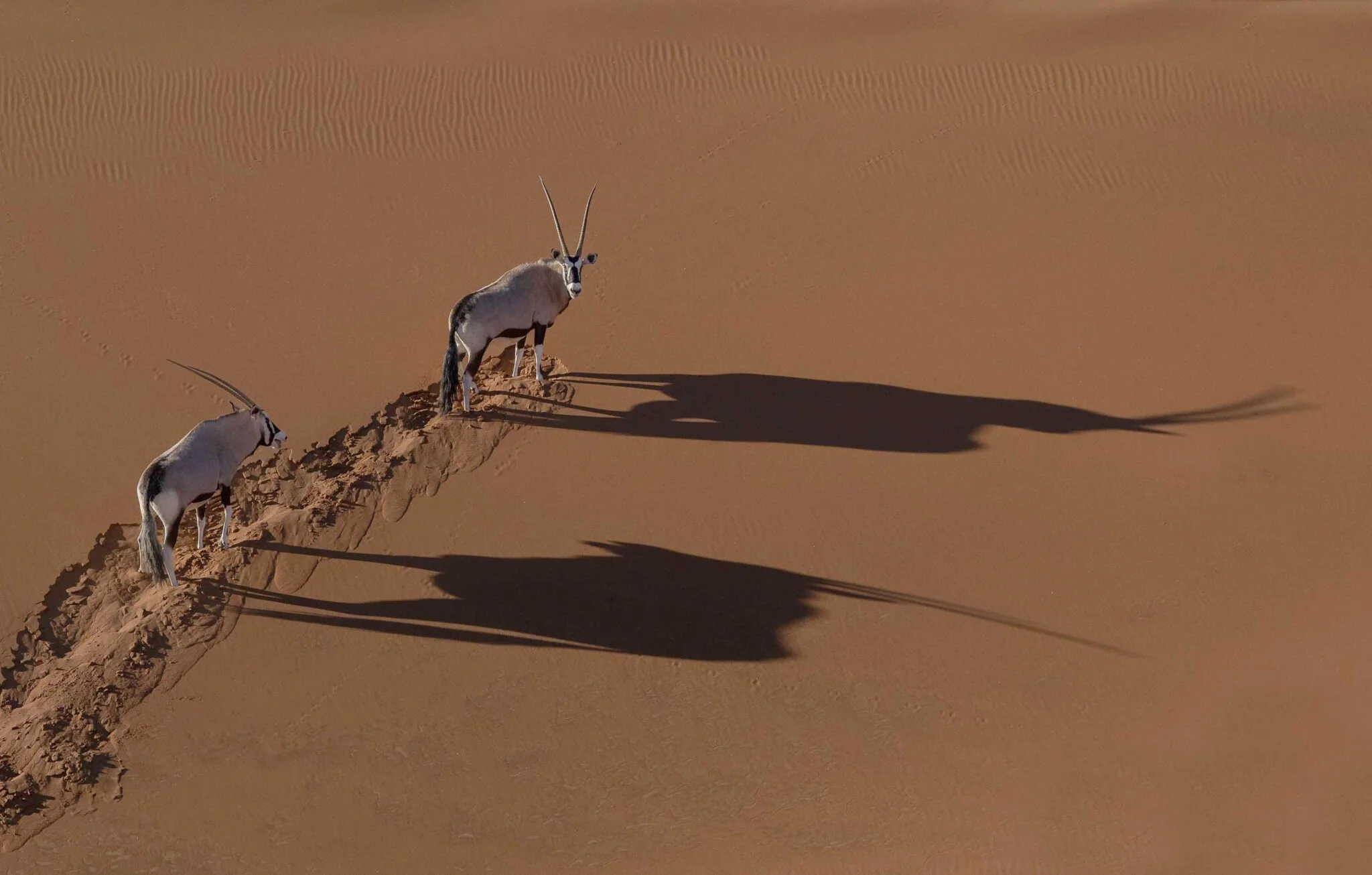
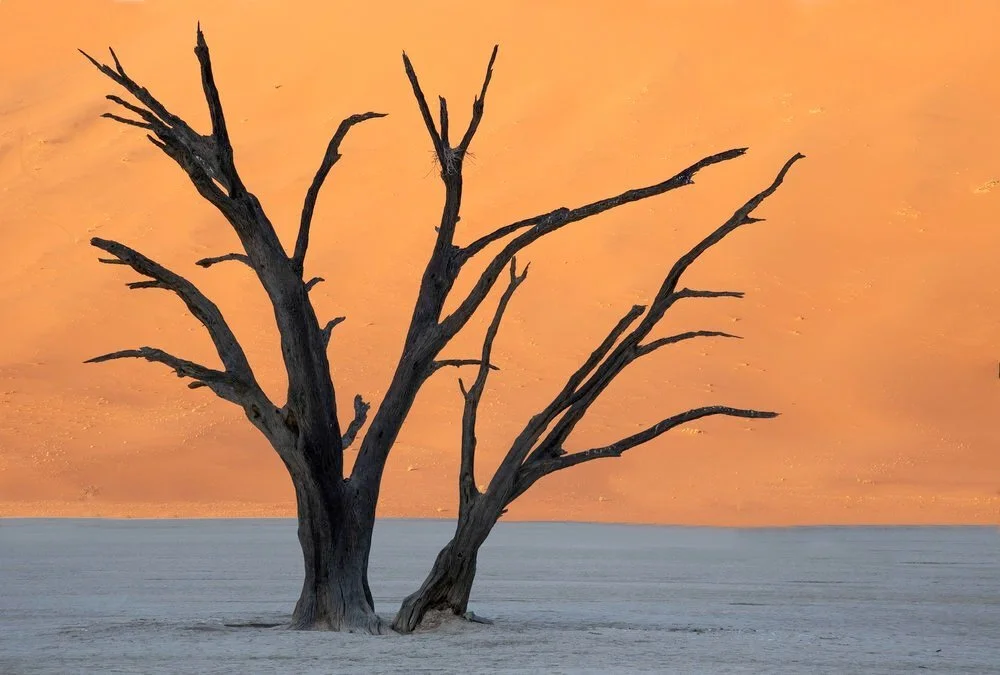
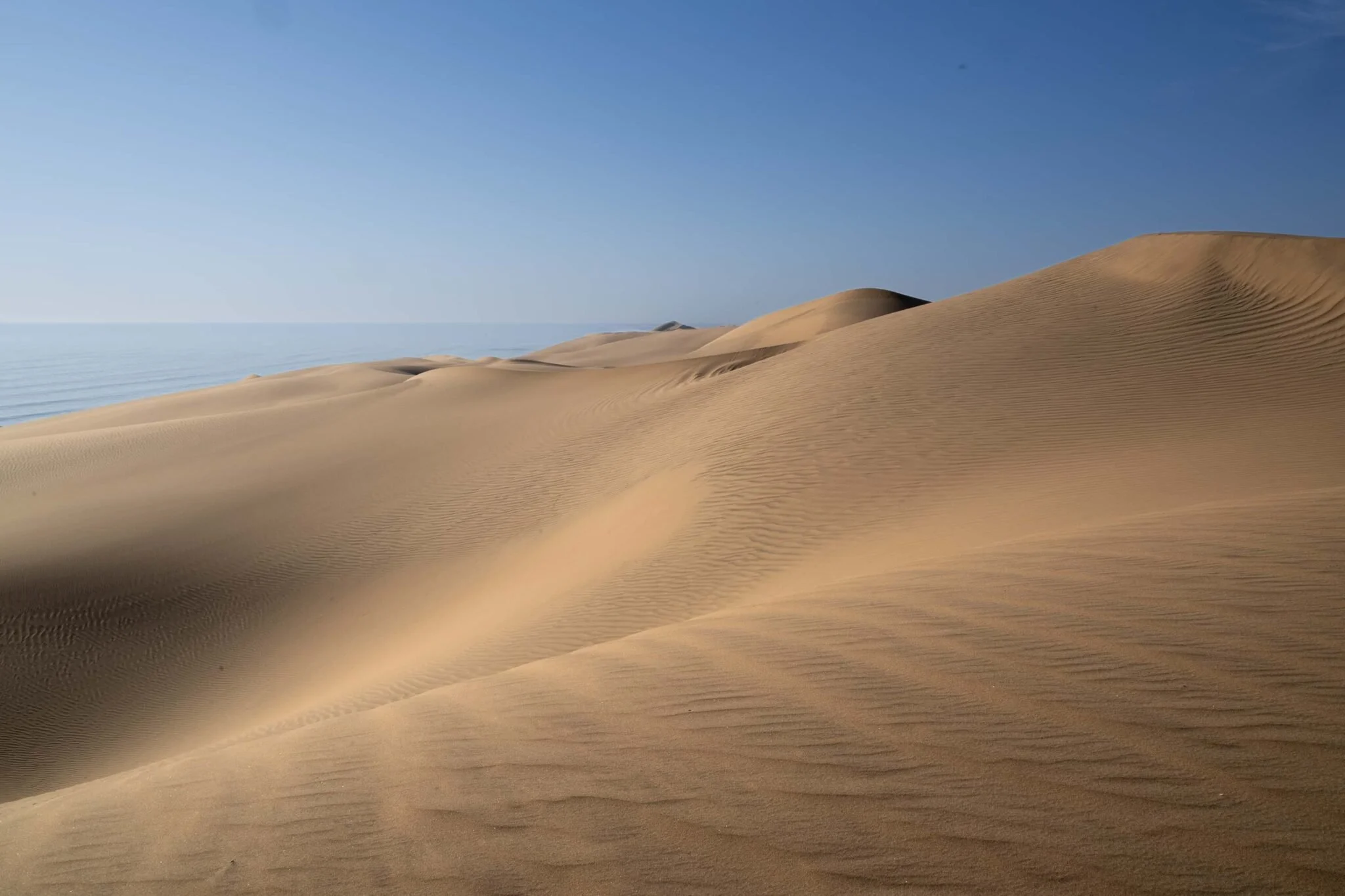
Few places hit you like Deadvlei—the white clay pan, the scorched skeleton trees, the red dunes towering above like waves frozen in time. At sunrise, the contrast of shadow and fire-red light creates scenes that feel otherworldly. Sossusvlei, just beyond, holds its own magic—giant dunes rippling with texture, oryx silhouetted on the ridgelines. It’s a dream for photographers who love simplicity, contrast, and timeless design shaped by wind.
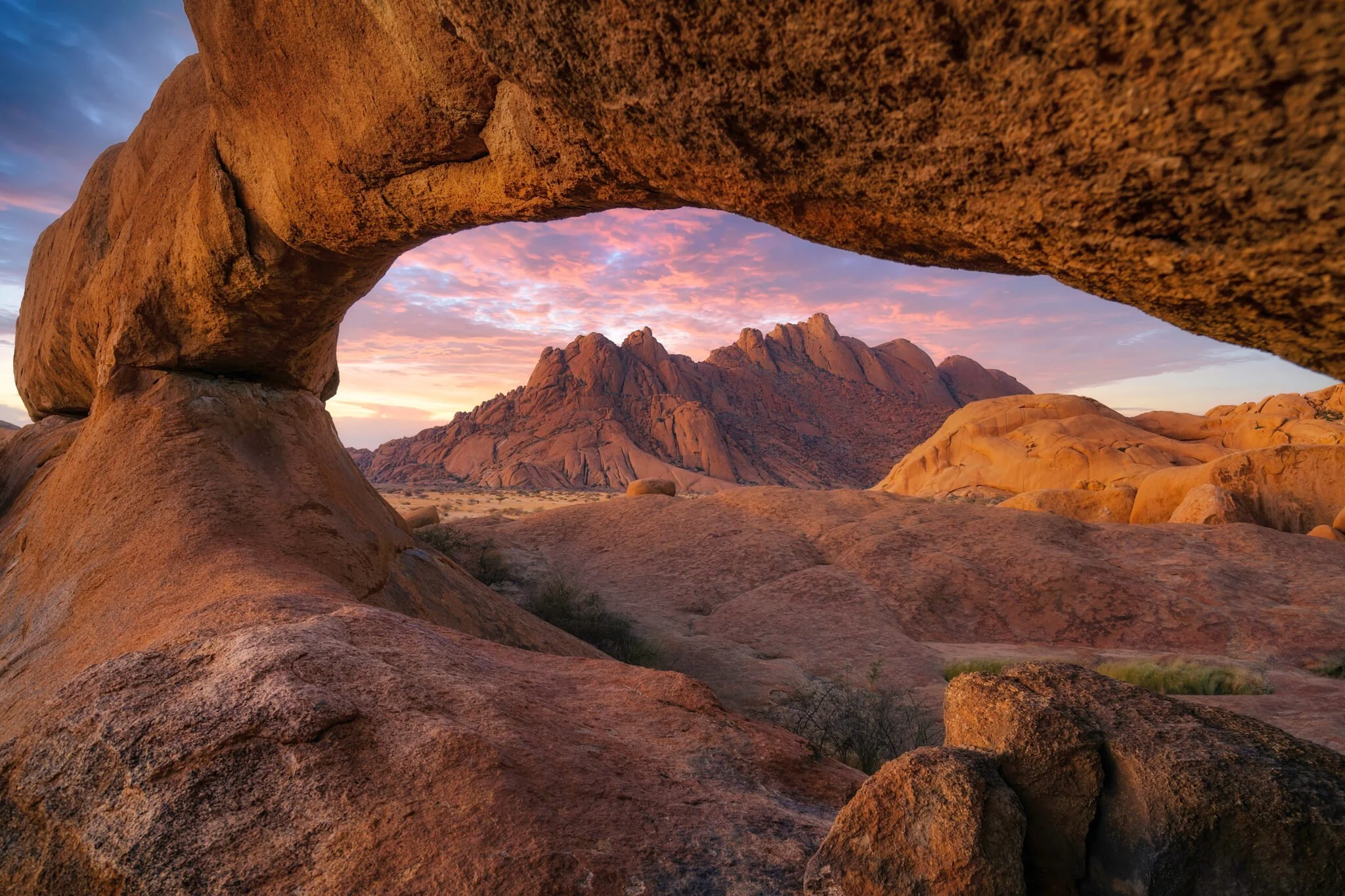
Spitzkoppe - Where the night skies come alive
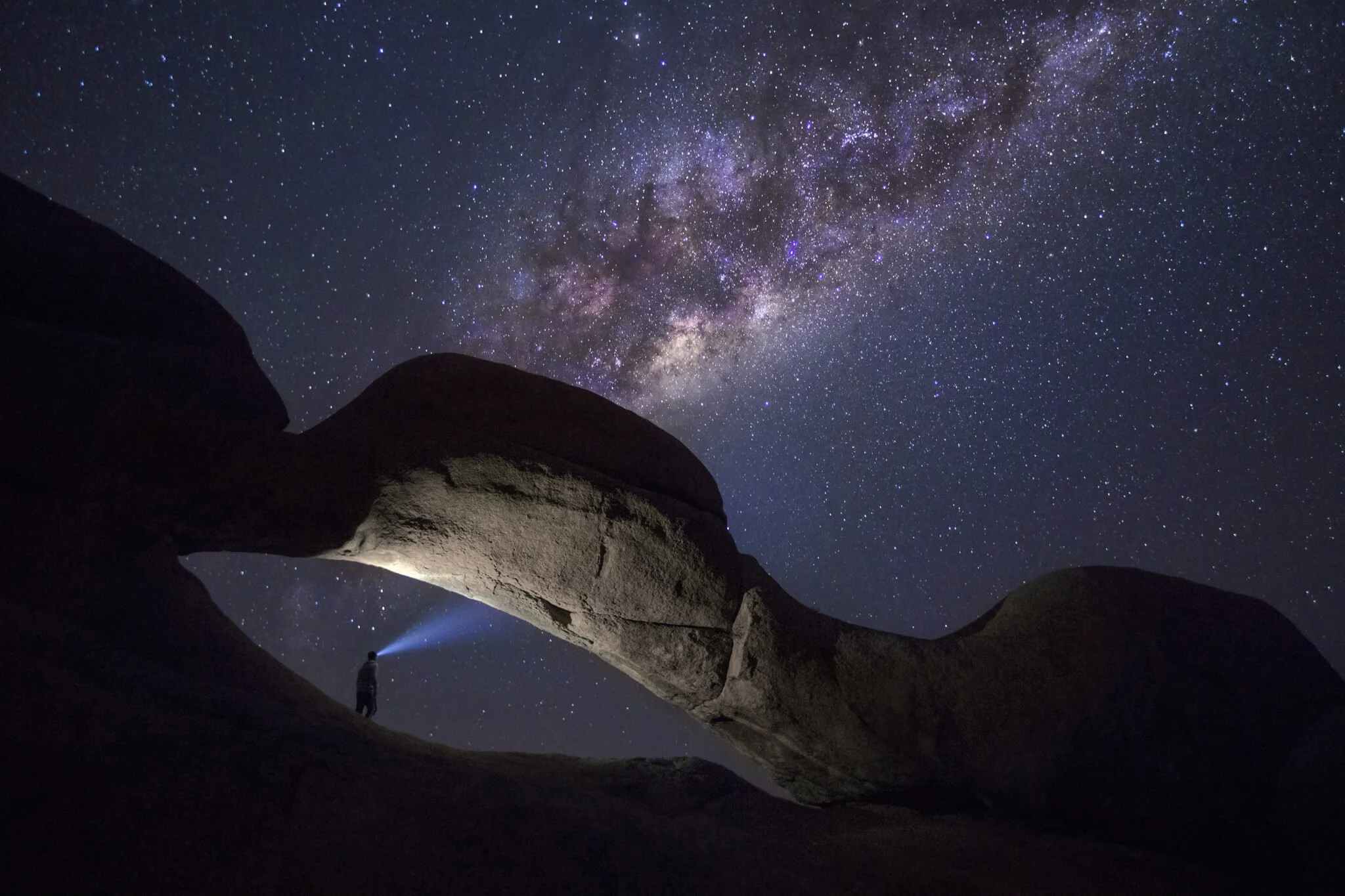
Spitzkoppe’s granite peaks, natural arches and clear desert skies make it one of Namibia’s best locations for landscape and night photography. We plan our sessions around the strongest light and, on selected departures, the new moon. With only five photographers, everyone has room to build foreground compositions around the arch and surrounding rock formations.

Etosha and my other Favorite Wildlife Areas in Namibia
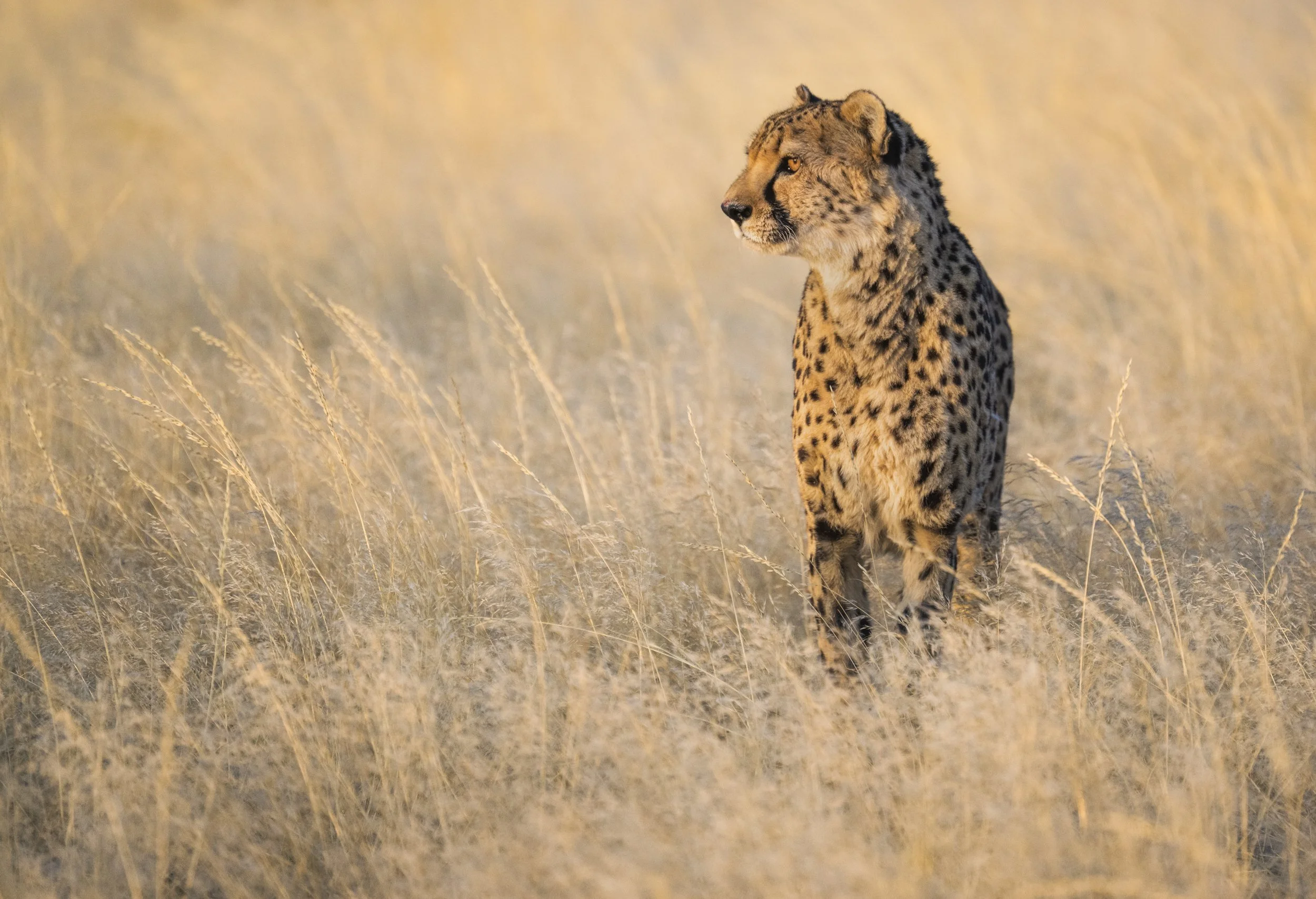
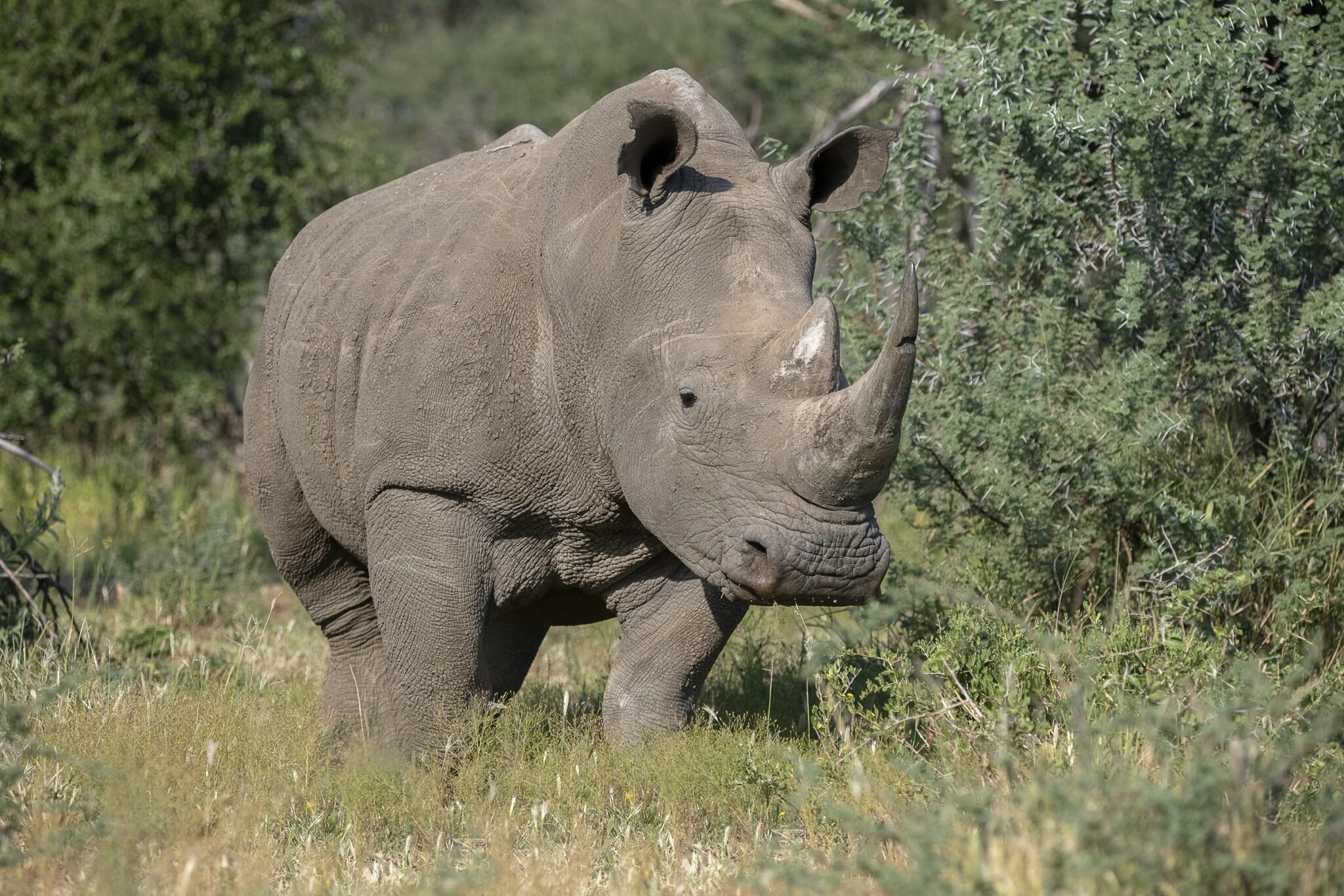
Namibia’s wildlife offers more than just sightings—it offers stories told in dust, light, and silence. At Etosha’s waterholes, elephants emerge from heat haze like ghosts. Desert-adapted lions and rhinos navigate vast, unforgiving terrain. And every encounter, whether a springbok sprinting across salt flats or a lone oryx standing on a dune, reminds you that survival here is an art—and photographing it, a privilege.

Quiver Tree Forest
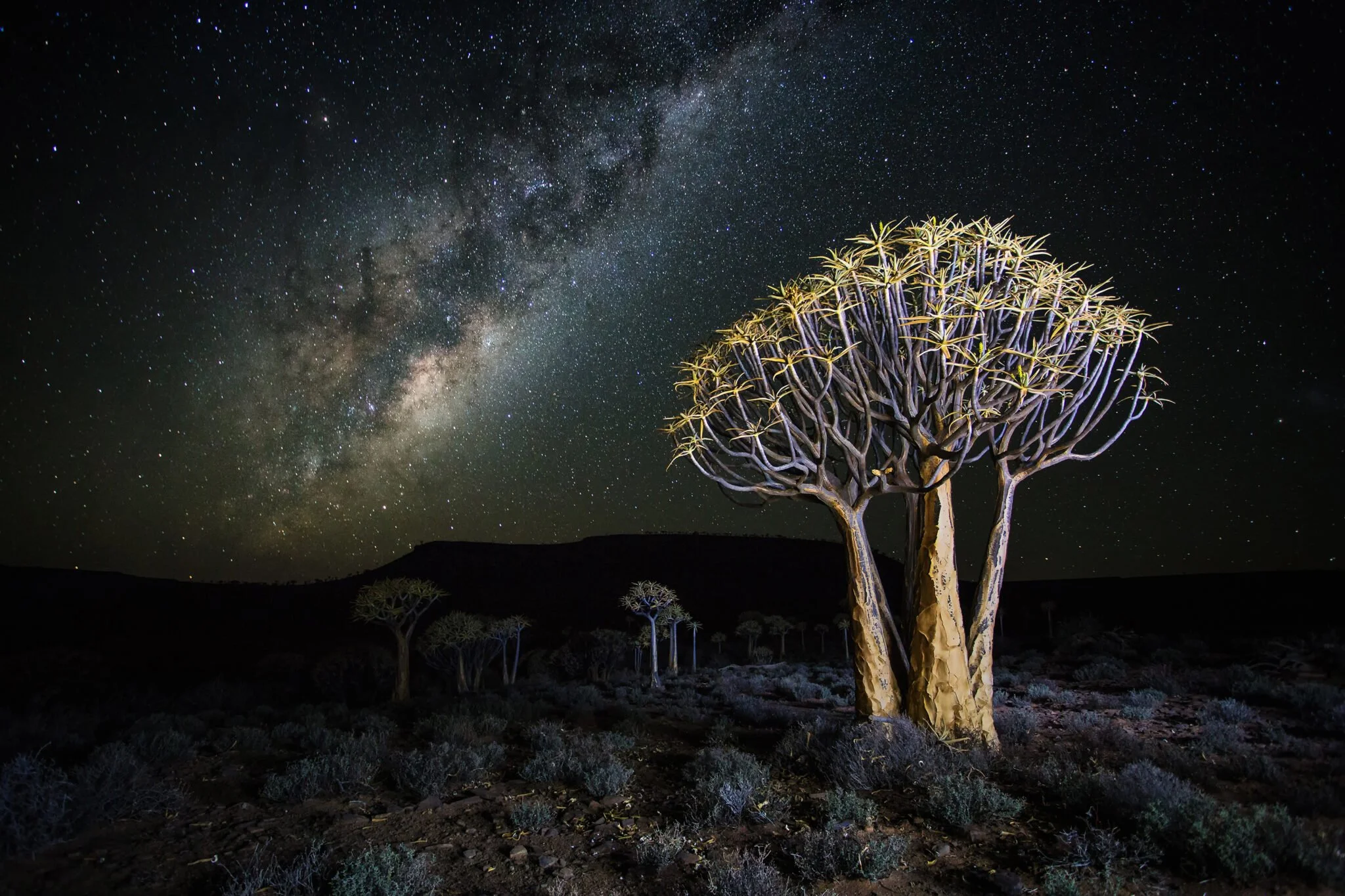
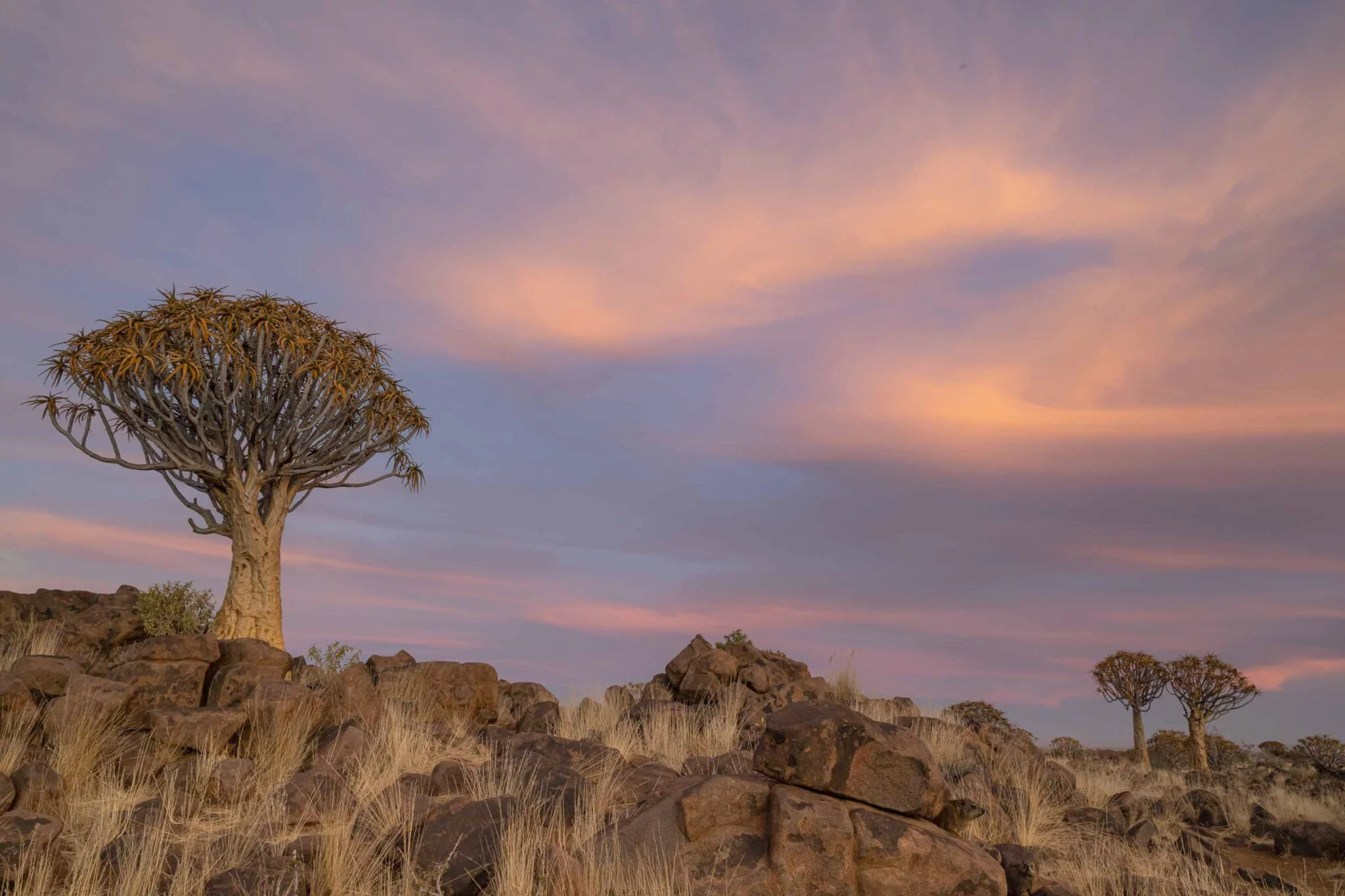
In the Quiver Tree Forest, you don’t just photograph trees—you photograph time. These towering aloes, centuries old, twist upward like frozen fireworks against a desert sky that turns gold by day and glows with stars by night. The landscape is surreal and sculptural, begging for wide compositions at sunset and ethereal silhouettes under the Milky Way. It’s a place that reminds photographers how light, space, and silence can shape a frame.
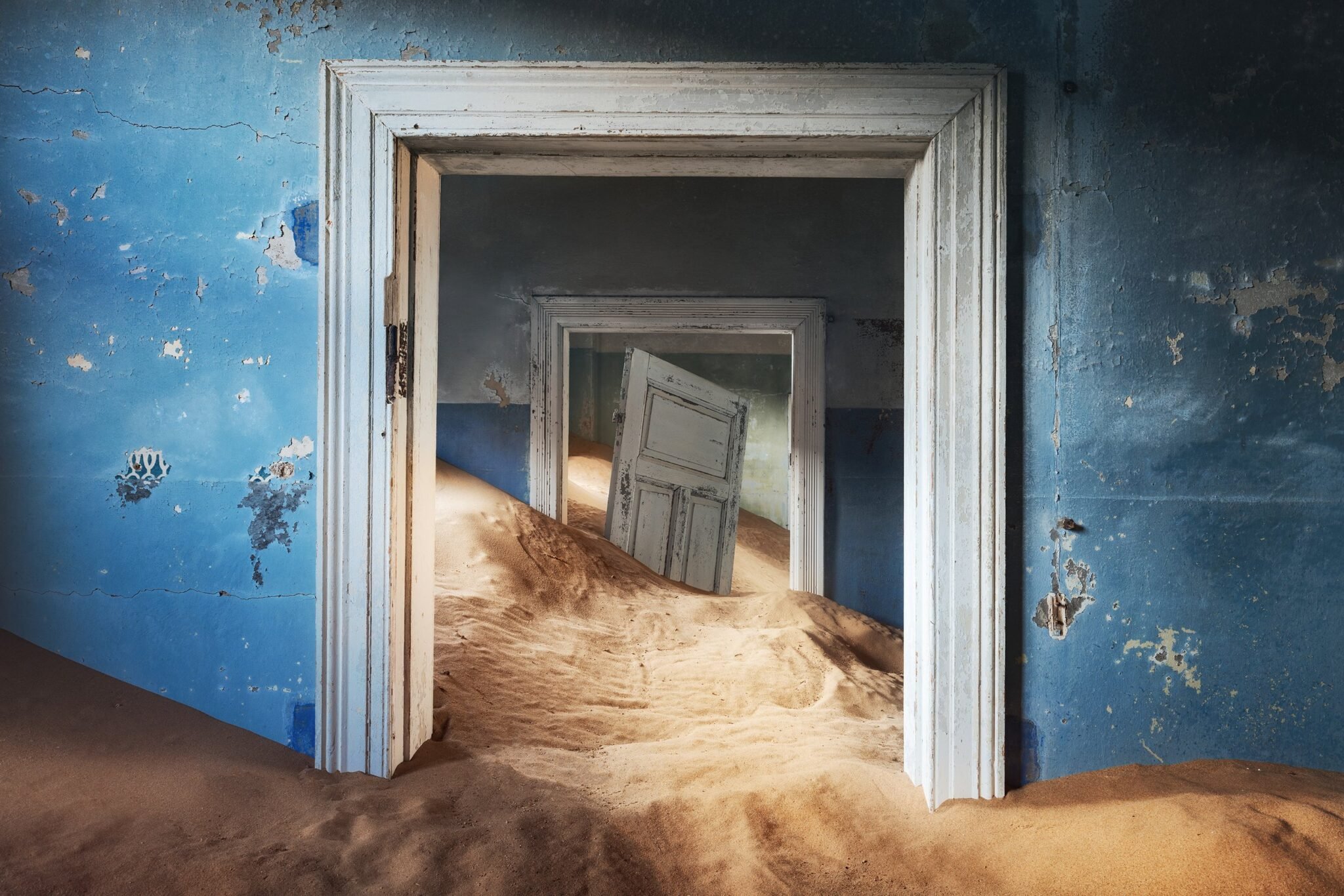
Kolmanskop - The Ghost Town being reclaimed by nature
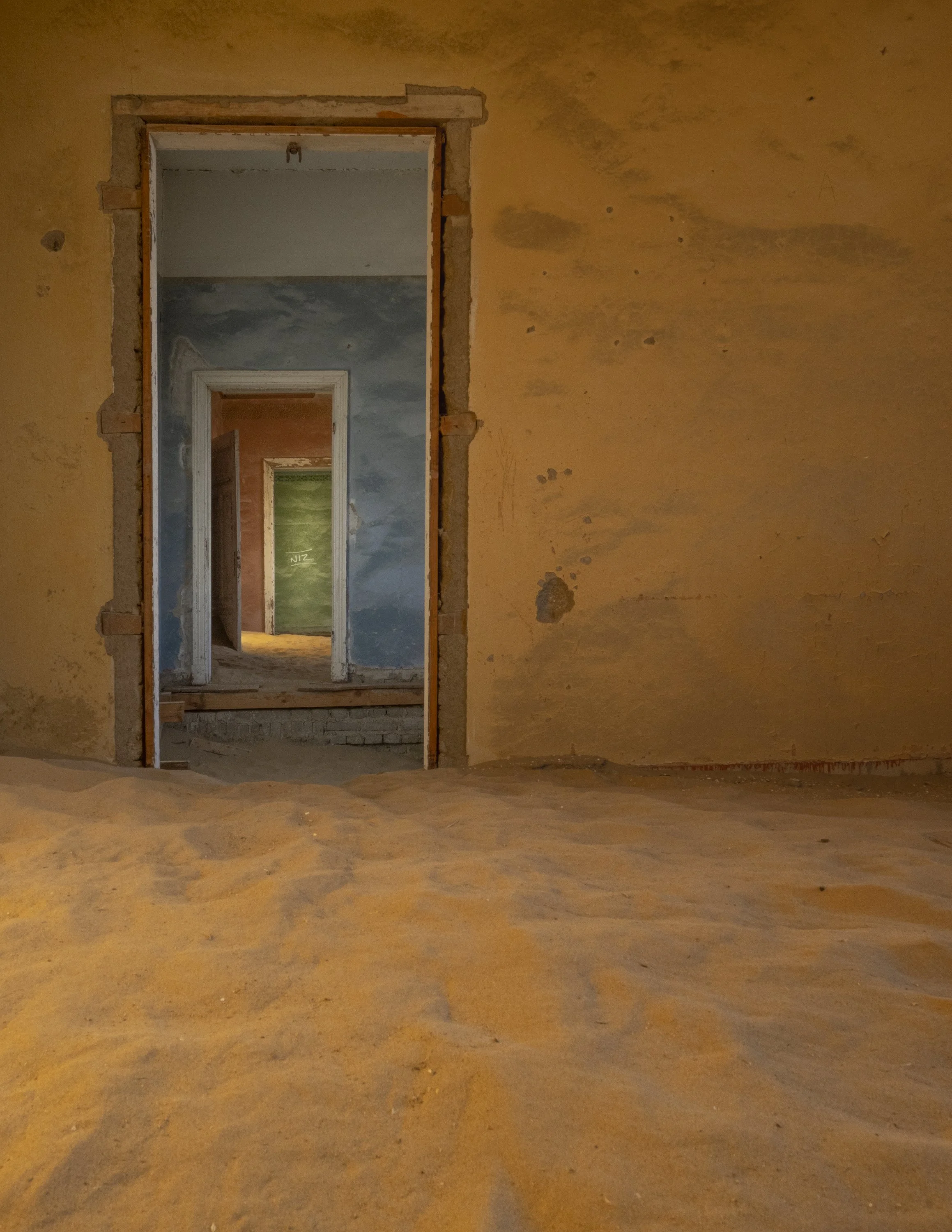
Kolmanskop is what happens when opulence surrenders to the desert. Sunlight slices through broken shutters, sand pours through doorways, and each abandoned room feels like a stage set for shadows and stories. As a photographer, you’re chasing both light and memory here—waiting for the perfect moment when past and present intersect in the frame. It’s never the same twice, and that’s what makes it unforgettable.

The Himba People of Namibia
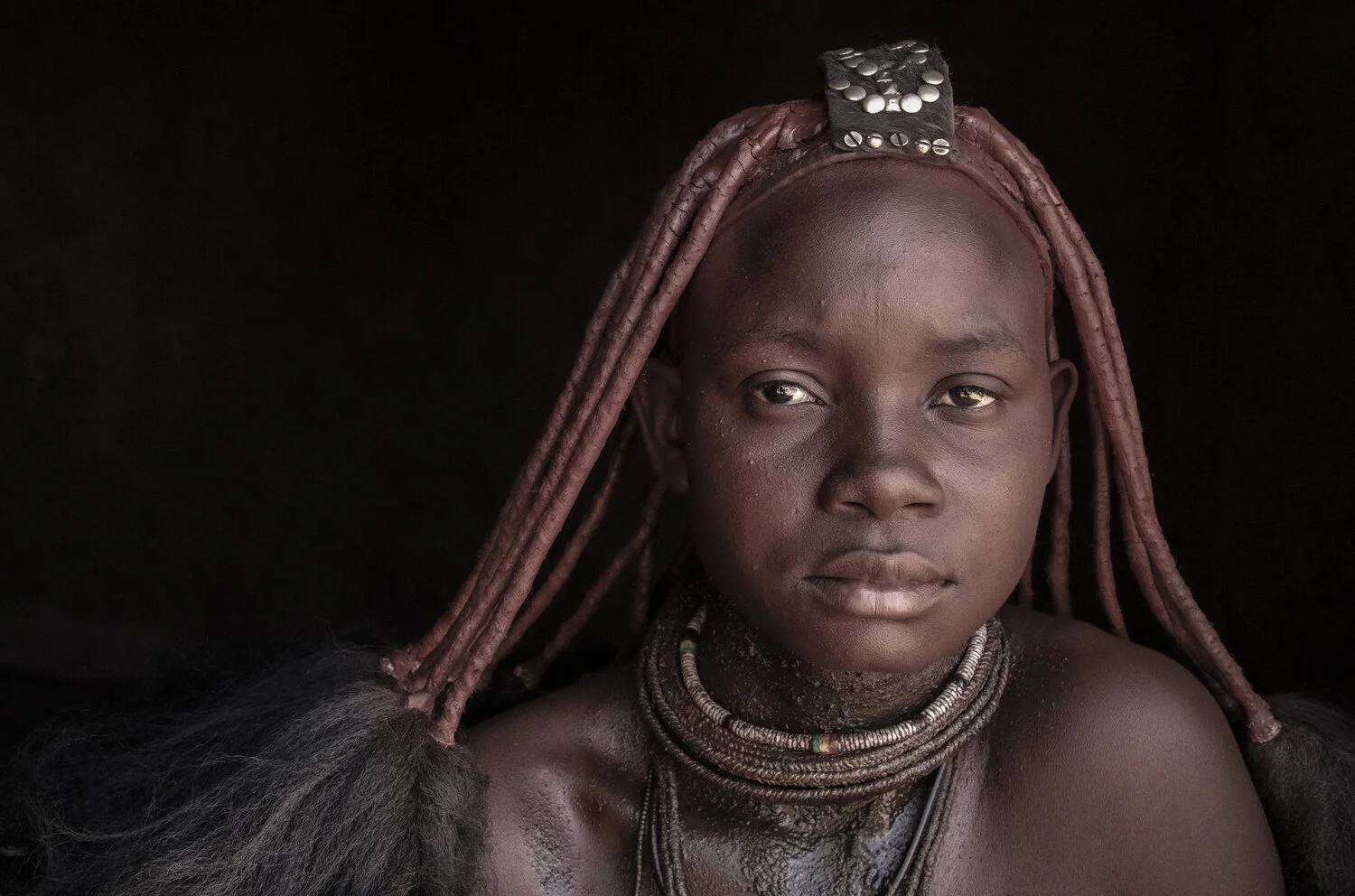
Photographing the Himba is about connection, not just composition. Their ochre-covered skin, intricate hairstyles, and timeless rituals offer a visual richness that commands respect and care. When you take the time to understand their world—the smoky baths, the communal rhythm, the stories etched into daily life—you don’t just make portraits. You create images that breathe with meaning and honor a culture as old as the land itself.
What Clients Say After Returning Home From One Of My Namibia Workshops
“We have been on pro photo tours on 7 continents. We never had anywhere near the guiding, instruction, real-time feedback, and post-processing support that Kevin Pepper provided. He got to know us in pre-trip planning re: what images we wanted to shoot to help him customize the trip. On-safari, he provided technical support of our shooting styles, got us to where we had to be at the right time to get the best morning light continuum, then image reviews after lunch before repeating the same shoot in afternoon light. And how many instructors have actually taken remote control of your computer to fine tune your images? It was really a workshop and I am a better photographer for it.”
“I came home from all my trips with award-winning photos.”
“Loved the experience from the beginging to the end of the Akari Photo Tour.
It was a 5 star experience.
Thank you, Kevin!
You are wonderful!!”
“I had not travelled with Kevin before so did not know what to expect on my first trip. I was really pleasantly surprised with the amount of time and effort that he put into ensuring that each individuals requests/wants/needs were fulfilled each day. It was a real pleasure traveling and learning from him.”
“His knowledge of the locations and with his local contacts, means a key understanding of the best locations and also the ability to make quick changes due to weather or other conditions. Logistics with regard to accommodation and meals have never disappointed; even a last-minute birthday cake when it came up it was a client’s birthday on a particular day, demonstrates his level of care.”
“Great all round opportunities for iconic images. Small group a plus for shooting.”
“The amazing Kevin P, who never sleeps. Our fearless tour leader herding and organizing us cats, added incredible value in finding just the right spot at just the right time for dynamic photos including recommending camera settings for the best shot. Also wandering ahead to find new and interesting things to photograph. Encouraging and helping us to improve our photo skills. Kevin P has been to Namibia so many time he knows all the good spots and what to do.”
Photography Gear You Should Use on our Namibia Photo Workshops
Photographing Namibia means shooting in some of the world’s most dramatic conditions—harsh desert light, dusty terrain, vast open spaces, and pitch-dark skies. Having the right gear not only helps you make better images, it protects your equipment and maximizes your chances of capturing fleeting moments. From wide-angle lenses for sweeping dunes to long telephotos for wildlife, and from durable tripods to lens cloths you’ll use daily, this guide walks you through what I recommend based on years of experience leading workshops across Namibia’s wild and remote landscapes.
Learn What photography and editing skills We Teach on our Namibia Photo Workshops

On our Namibia photo tours, we teach more than just camera settings—we teach photographers how to see. Whether it’s mastering light in the dunes at sunrise, composing a story in a ghost town hallway, or capturing the emotion in a Himba portrait, every moment in the field becomes a lesson. I help participants refine their technical skills, think more intentionally about their images, and connect more deeply with the landscapes and people they’re photographing. The goal isn’t just to come home with great photos—it’s to grow as a photographer in one of the most inspiring places on Earth.
The Accommodation We Like to Stay at on our Namibia Photo Workshops – and Why It Matters
We choose accommodations that support our photography goals, pamper your backs with comfy beds and feed you 5-star meals.
Olive Grove Guesthouse (Windhoek)
A calm landing pad before the adventure starts. Easy logistics. Comfortable reset. Cool drinks by the pool and amazing food.
Read: Olive Grove Guesthouse
Dead Valley Lodge (Sossusvlei area)
The right base for dunes and Deadvlei—less commuting, early access to Deadvlei, more shooting time.
Read: Dead Valley Lodge
TIMBILA GAME RESERVE
A private game reserve with elegant accommodations and the Big-4 of Namibia
Read: TimBila Game Reserve
Spitzkoppen Lodge (Spitzkoppe area)
A photographer’s basecamp with night skies with more stars than you thought existed.
Read: Spitzkoppen Lodge
Andersson’s Camp (Ongava / Etosha area)
The kind of place where wildlife photography feels built into the day. Just make sure you bring your camera to dinner. You will have visitors.
Read: Andersson’s Camp at Ongava
Some of our workshops will have us using different lodges. Exact accommodations vary by departure. But feel free to ask us where we are staying on the photo workshop you are interested in attending.
Read Our Namibia PHoto Workshop Trip Reports From The Last Few Years
Read the 2026 Trip Report from our Namibia Safari that we ran in August of 2026.
Read about our Namibia Photo Workshops in this trip report, we call, Towering Dunes and Dusty Laughter
Read about what its like on our Namibia Photo Safari Workshop by reading this trip report.
Read about our latest landscape and night sky tour by reading our trip report on our last Landscape + Night Sky Photo Workshop
Frequently Asked Questions About Namibia Photography Tours
Is Namibia safe for Photographers?
Yes—Namibia is widely considered one of the safer countries to travel in Africa, and it’s a place we’ve worked in for years. Like anywhere, you use common sense (don’t flash gear in city crowds, keep valuables out of sight, lock bags in the vehicle), but on tour—moving between lodges, parks, and remote landscapes—it’s a very comfortable, low-stress destination.
Why Do You Visit The Locations You Visit
After visiting Namibia for over a decade, we have learned what works for photographers, and what does not work. We have made the mistakes, and we have refined our itinerary based on that experience to deliver what we believe is one of the most complete Namibia workshops that are offered today.
How physical is a photo workshop in namibia?
Moderately physical, but very doable. The “hardest” part is usually walking on soft sand (dunes + Deadvlei), which can be a workout. Most locations are vehicle-accessible, and we can adjust pace—more shooting time close to the vehicle, or longer walks for those who want bigger perspectives.
When is the best time to visit Namibia?
Best overall window (weather + wildlife + clear night skies): late May to September. That’s Namibia’s dry season. Rain is rare, humidity drops, and skies are typically clearer—exactly what you want for night photography. It’s also when wildlife viewing gets easiest, because animals concentrate around waterholes and the grass is shorter, so you’re not trying to photograph a lion through a salad bar.
Weather: Cooler, drier days and far fewer storms/cloud build-ups than summer.
Wildlife photography: Dry season pulls wildlife to predictable water sources (Etosha in particular), and reduced vegetation improves sightlines.
Night photography: Dry air + less cloud cover = more usable nights. And in the Southern Hemisphere, the Milky Way core is visible from late January into October, so the dry season overlaps perfectly.
Pick your “best” month inside that window
May–June (some call it the sweet spot): Dry season starts, pleasant daytime temps, and nights aren’t at their coldest yet. Great balance for astro + long days in the field.
July–August (peak reliability): Often the clearest, driest stretch and strong for wildlife—just expect cold nights (bring real layers, not “I’ll be fine” layers).
September: Still dry and strong for wildlife, with slightly warmer nights than mid-winter in many areas. (Also: the end-of-trip campfire feels earned.)
October: Often excellent wildlife concentration as it gets drier, but heat ramps up, and it can feel harsher mid-day.
When not to go (if astro is a priority)? November–April is the greener/wetter season—beautiful in its own way, with dramatic skies and some newborn animals/birding perks, but more clouds and storms can steal your Milky Way nights.
How much experience does Kevin Pepper have leading photography workshops in Namibia?
I've been photographing and leading groups in Namibia since 2014 and have now led more than ten photography workshops across the country
How much driving is involved?
Namibia is a big country, so yes, there are driving days. Expect a mix of shorter hops (1–2 hours) and a few longer transfers (4–6 hours, occasionally a bit more depending on route, conditions and how many awesome things we see to photograph). We break it up with photo stops, proper stretch breaks, and timing that keeps the day feeling like a journey—not a commute.
Why Should You choose a small-group Namibia photography workshop?
Because limiting the number of people that attend will give you more room to work in the small areas of Kolmanskop, it will not have you repositioning yourself at night during our Milky Way shoots to get that perfect angle. It will give you a window seat for wildlife days without splitting the group up into two vehicles. But most importantly, it gives me more time to help you when it matters most.
Do you offer helicopter flights?
Yes—helicopter flights are available as an optional add-on in the Sossusvlei area (and sometimes other regions, depending on logistics). It’s not required, but if you want aerial patterns of dunes and desert geometry, it’s one of those “you’ll remember this forever” upgrades.
We also have a flying Namibia safari where we have included helicopter flights and air transfers between locations.
Can you fly a drone in Namibia?
Sometimes—but it’s not a simple “yes.” Drone rules and permissions vary by location (especially in national parks, near people, lodges, and sensitive areas), and enforcement can be strict. Our approach: assume no until we’ve confirmed where you want to fly and what permissions are needed. If you bring one, bring it expecting limited, carefully chosen opportunities.
Recommended Camera Gear for Namibia
A simple, reliable kit wins in Namibia:
Two bodies (optional but helpful): one set up for wide/standard, one for telephoto.
Key focal lengths: wide (14–24 / 16–35), midrange (24–70), tele (70–200), and if you love wildlife, a longer lens (100–400 / 200–500 / 180–600).
Tripod: recommended for sunrise/sunset, night sky, and careful compositions in the dunes.
Polarizer: helpful in some conditions, but not essential every day.
Will you help with settings and editing?
Absolutely. In the field, we help you dial in exposure, focus, motion, and composition in real time—so you’re not guessing while the light is perfect. We also do image reviews and editing guidance so you go home with stronger files and stronger instincts.
What about dust and protecting Your Photo gear?
Dust is part of Namibia’s charm… and part of your sensor’s character development.
Keep a camera/lens combo ready so you’re not constantly swapping in the wind.
Use a small blower, microfiber cloths, and zip bags/dry bags for transport.
Change lenses inside the vehicle or with your back to the wind.
A simple rain cover (or even a shower cap) works great during dusty drives.
Can a non-photographer join your photography tour in namibia?
Usually yes—if they understand what the trip is. This is a photography-first tour: early starts, chasing light, stopping when a scene is good (which is often), and spending time shooting. If they enjoy nature, travel, and don’t mind a partner who gets excited about “one more angle,” they’ll fit right in. If they’re hoping for a fast-paced sightseeing itinerary, this won’t be their favorite kind of vacation.
HOW LARGE ARE YOUR Photography Groups
I believe that smaller groups work best in Namibia. That’s why we limit our tours and workshops to just 4-5 people. More one-on-one attention and more room for you to get the photos you came to namibia to take.
Photos from Namibia That I Will Help You Take on A Photo Workshop

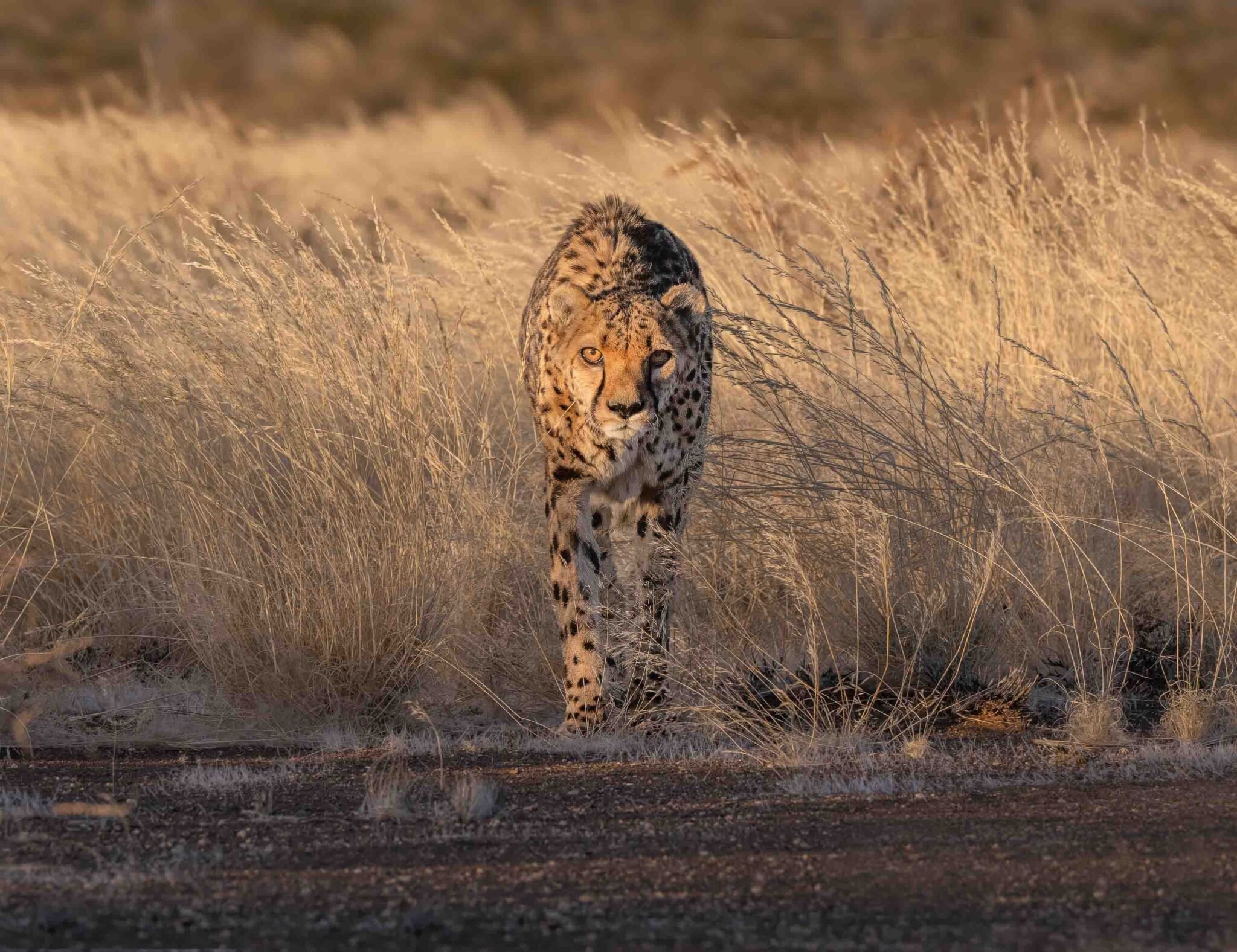
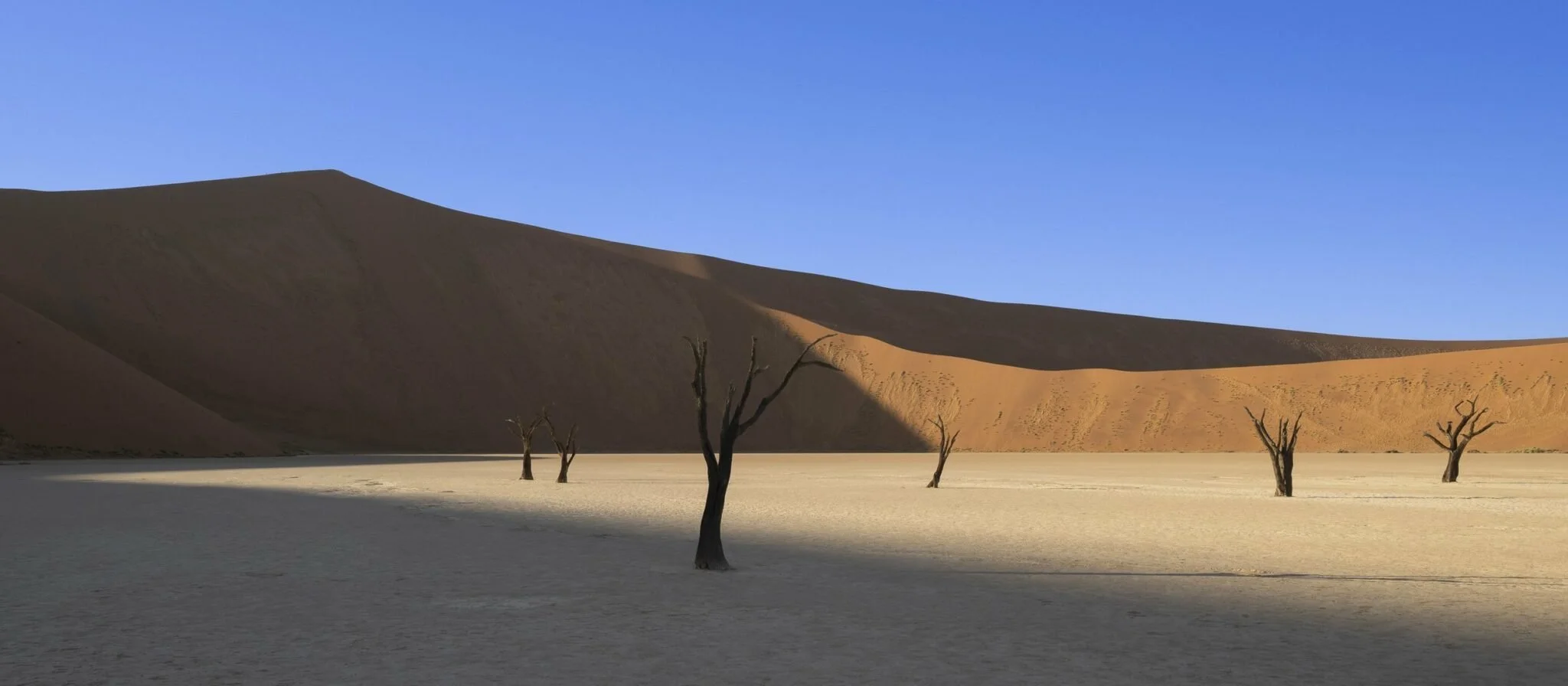
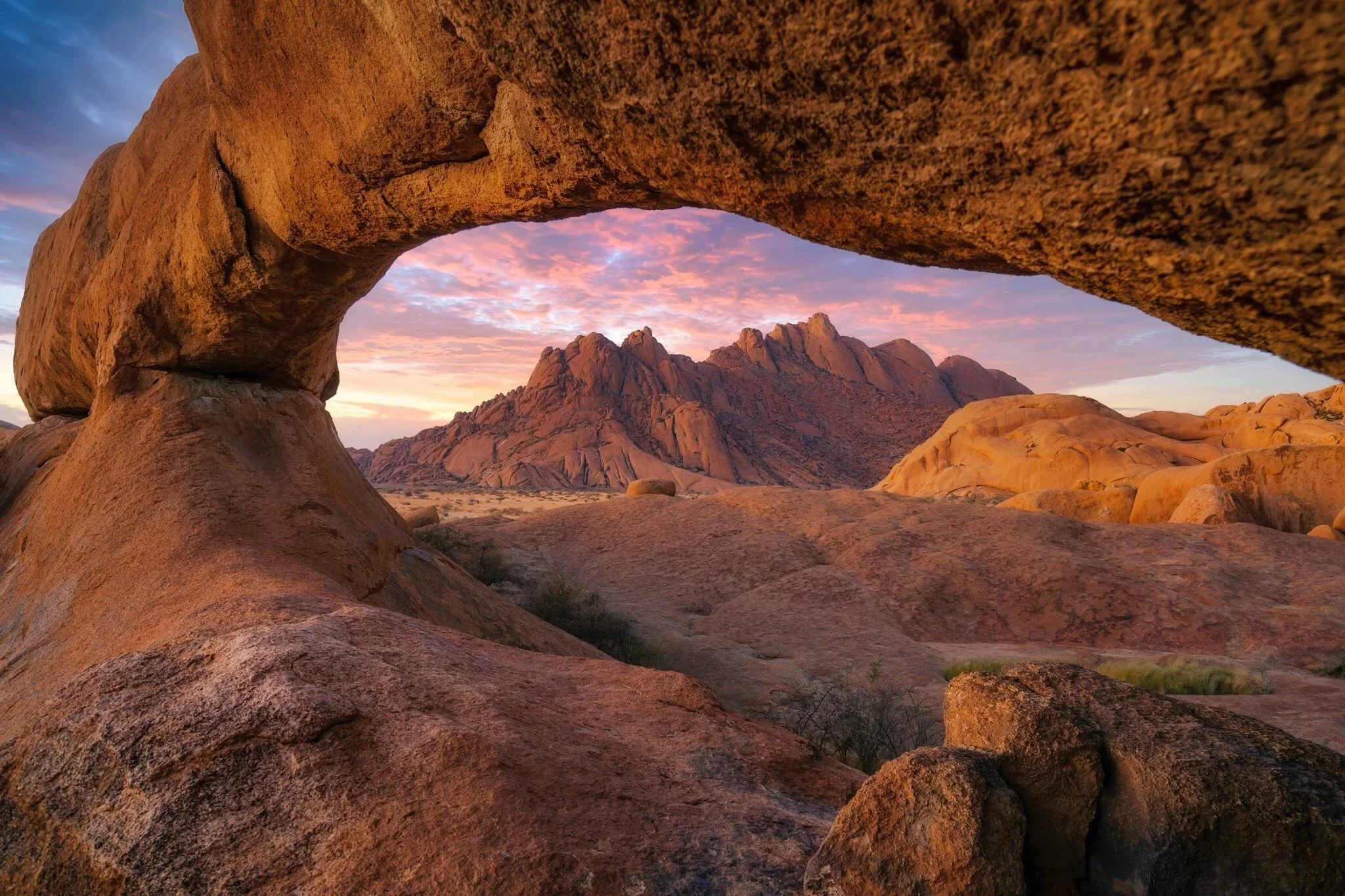
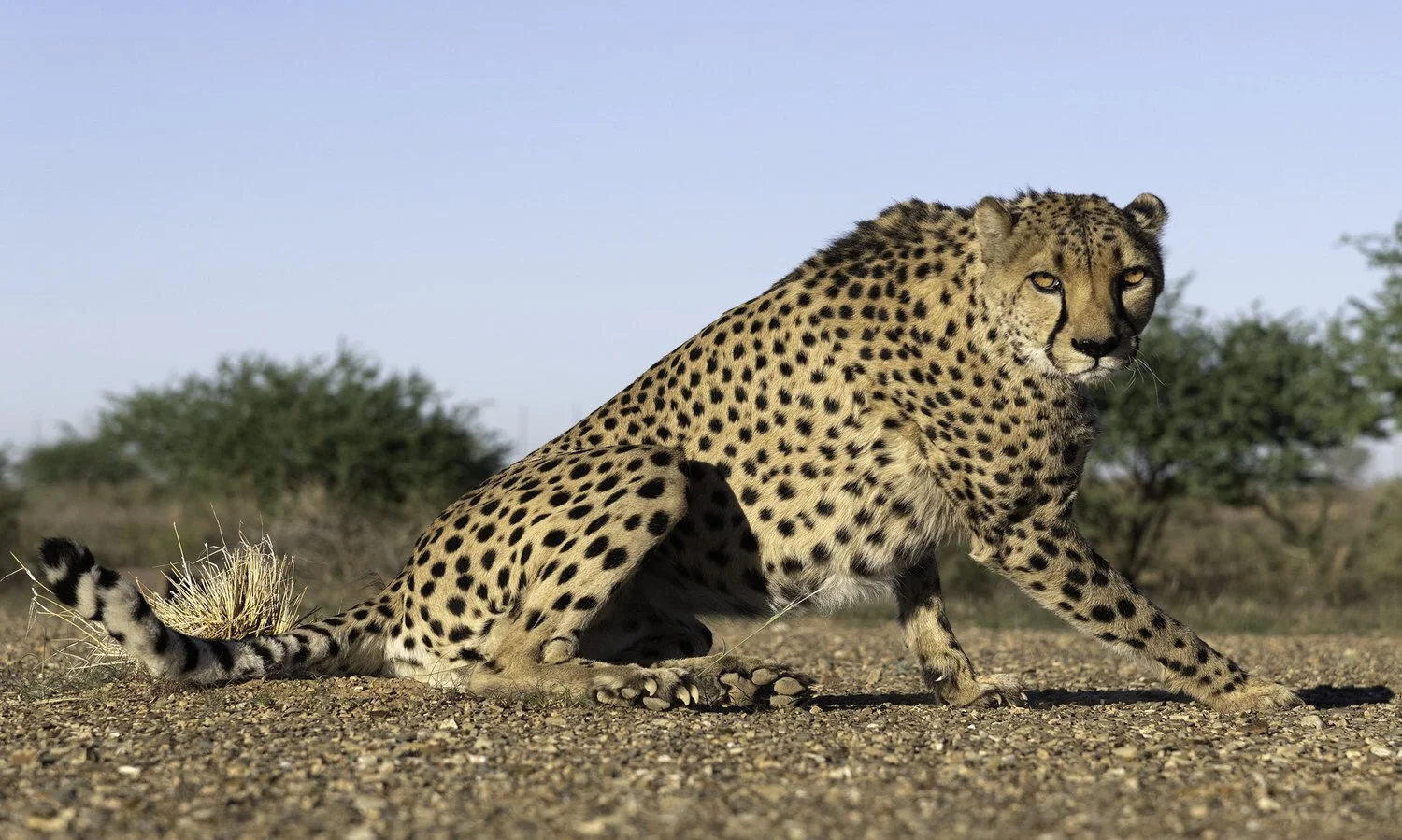



Join me on a namibia photo workshop that I lead for AKARI PHOTO TOURS

You could visit Namibia on your own—but joining one of our photo workshops means you’ll be in the right place at the right time, with hands-on guidance from someone who’s been there countless times before. We don’t just take you to the iconic spots—we help you see them with a photographer’s eye, refine your technique, and build a portfolio full of images you’re proud of. You’ll also be part of a small, supportive group of like-minded photographers chasing light, sharing stories, and having the kind of experience that’s hard to create on your own.