How to Choose an African Photography Safari
What Photographers Should Know Before Booking a Safari
I've been leading photographers in Africa since 2013, and if there is one thing I've learned, it's that not every African safari is designed for photographers.
You can stay at an exceptional lodge, have a great guide, see plenty of wildlife and still come home frustrated by the photographic experience.
The difference often comes down to details that don't seem particularly important when you're looking at an itinerary online.
How many photographers are in your vehicle?
Can you move from one side to the other?
Will your driver reposition the vehicle for better light?
Will you stay with a sleeping leopard or leave because someone wants to find another species?
Can you be in the field when the light is best?
Does your guide understand photography?
Those questions can matter more than the thread count at the lodge.
If you're considering an African photography safari, here are the things I would look at before booking.
Start With What You Want to Photograph
Africa is enormous, and there isn't one destination that's best for every photographer.
That's one of the first things I discuss with photographers who ask me where they should go.
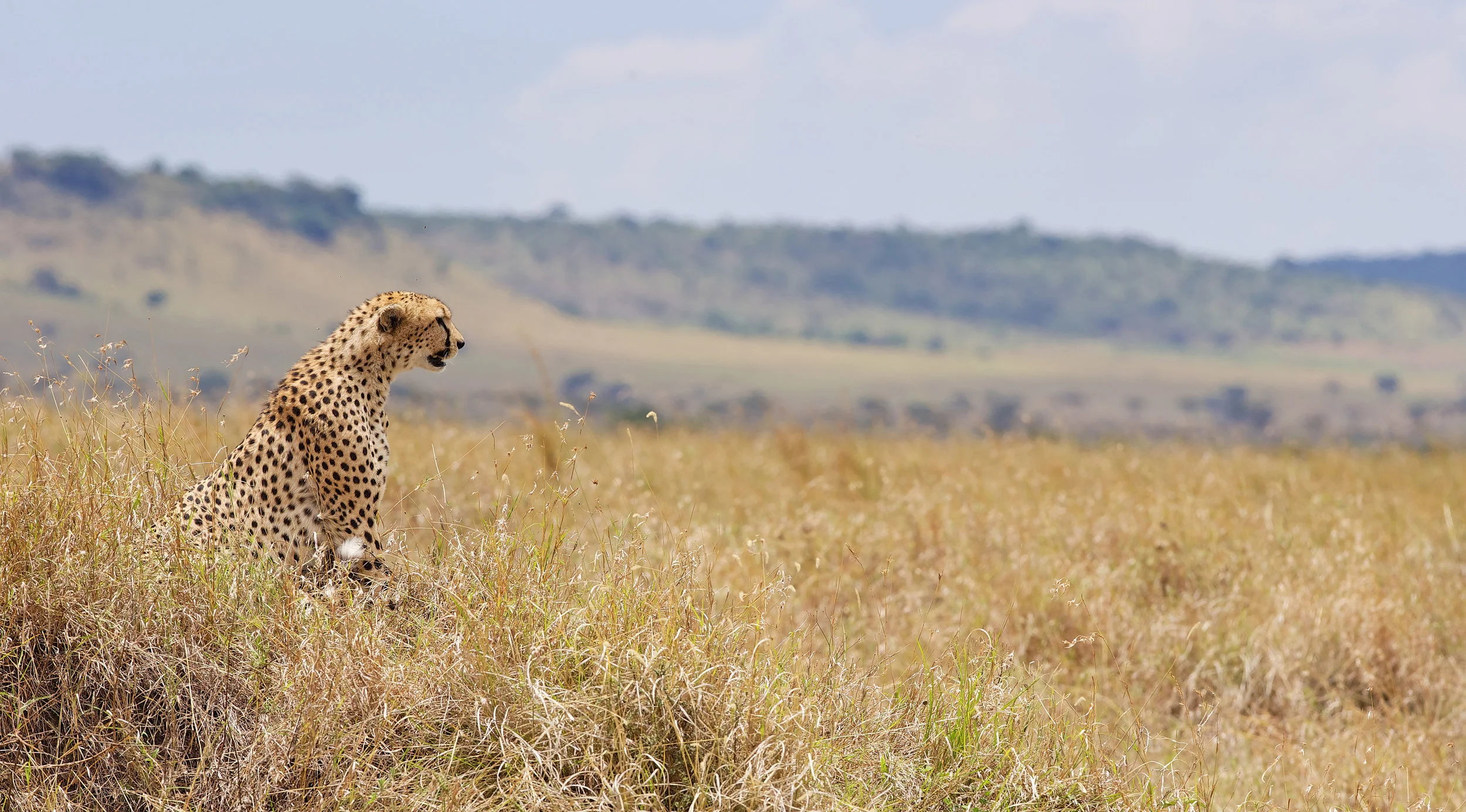
If your dream is photographing big cats, your answer might be different from someone who wants elephants, rhinos, birds, photographic hides or dramatic landscapes.
Before choosing a country, decide what photographs you hope to make.
Do you want lions and cheetahs on open plains?
Elephants against dramatic landscapes?
Rhinos at eye level?
Leopards?
Wild dogs?
Birds?
Animals coming to water?
Environmental wildlife photographs?
Close portraits?
Behaviour and action?
The more specific you can be, the easier it becomes to choose the right safari.
Don't choose Africa first.
Choose the photographic experience first.
Then find the part of Africa that gives you the best opportunity to create it.
A Photography Safari Is Different From a Regular Safari
This distinction is extremely important.
Most traditional safaris are designed around seeing wildlife.
A photography safari should be designed around photographing wildlife.
Those sound like the same thing.
They're not.
On a traditional safari, success might mean seeing a lion, leopard, elephant, giraffe and rhino in one day.
Once you've seen the lion, everyone is happy and the vehicle moves on.
A photographer may want to do exactly the opposite.
If we find a leopard sleeping in a tree, I'm often perfectly happy to wait.
Maybe it climbs down.
Maybe the light improves.
Maybe it starts hunting.
Maybe absolutely nothing happens.
That's the gamble.
But many of my favourite wildlife photographs have happened because we were willing to wait after other vehicles left.
Photography requires patience.
Make sure the safari you're booking allows for it.
Ask About the Safari Vehicle
This is one of the first questions I would ask.
Not:
What kind of vehicle do you use?
Ask:
How many photographers will be in each vehicle, and where will everyone sit?
Those are very different questions.
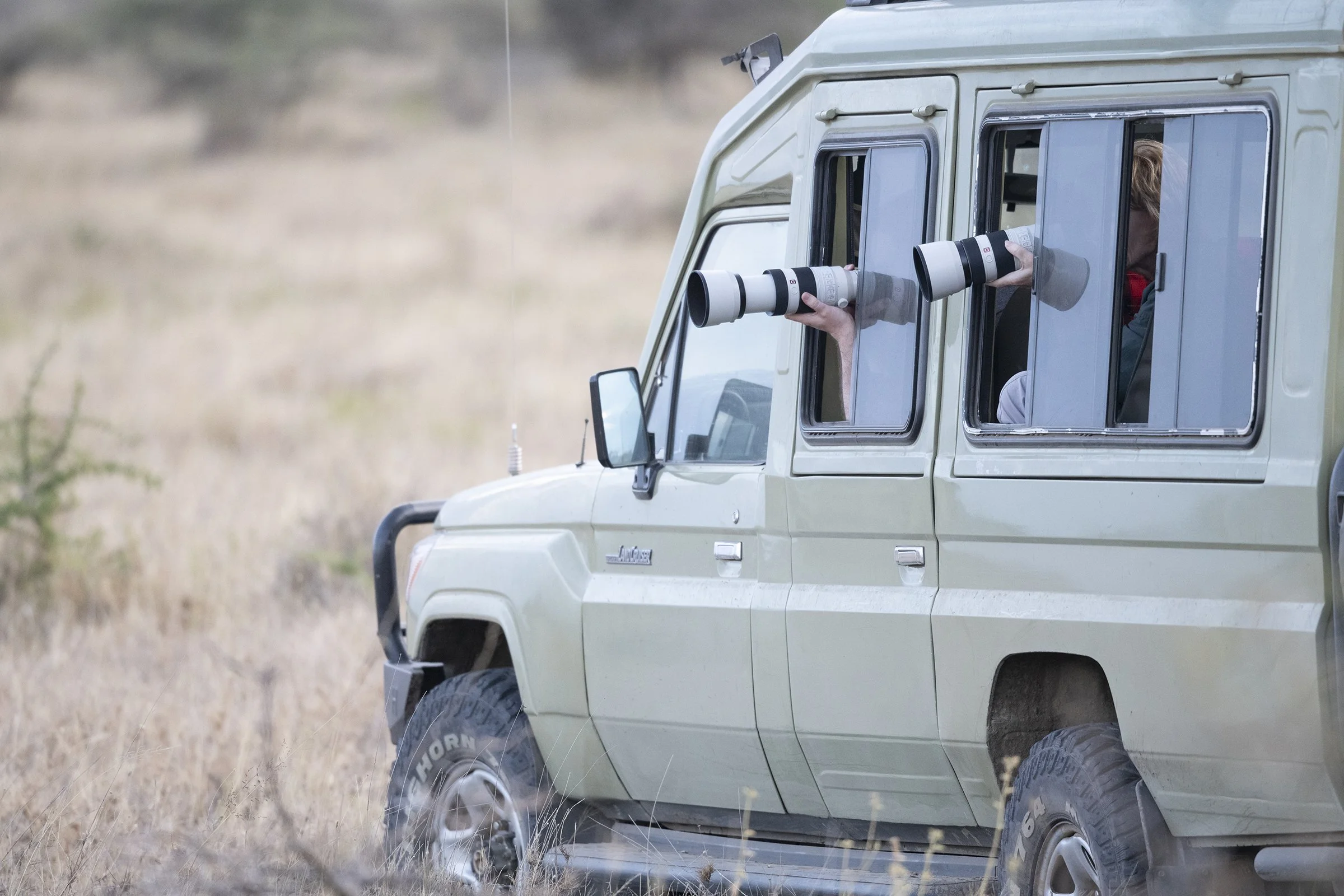
A safari company can advertise a beautiful custom Land Cruiser, but if you're squeezed between other photographers and can't move when wildlife appears on the opposite side, the vehicle isn't helping you very much.
I strongly prefer configurations that give photographers their own row or shooting position whenever possible.
Why?
Because wildlife doesn't read the itinerary.
A lion can appear on either side.
A leopard may walk behind you.
An elephant might approach from an unexpected direction.
You need to be able to react.
Ask whether photographers can move across the vehicle.
Ask whether roof supports interfere with long lenses.
Ask whether beanbags are supplied.
Ask whether windows open completely.
Ask how many photographers share each row.
Ask whether the vehicle is exclusive to your group.
These details may sound obsessive before the trip.
They won't feel obsessive when a leopard appears ten feet from the wrong side of the vehicle.

Group Size Matters More Than Instructor Ratio
This is something I've become increasingly convinced about.
A safari might advertise:
Two professional photographers for ten guests.
That sounds excellent.
A five-to-one instructor ratio.
But there are still ten photographers trying to photograph the same lion.
For me, the more important number is often:
How many photographers will be sharing the photographic space?
How many people are in each vehicle?
How many vehicles will arrive at the sighting?
How many photographers are sharing a hide?
Can everyone get a clean angle?
Can everyone reposition?
Can the vehicle move without ruining someone else's photograph?
Small groups generally cost more.
But you've already spent thousands of dollars travelling to Africa.
I'd rather have fewer photographers sharing the opportunity once we get there.
Your Driver and Local Guide May Be More Important Than You Realize
People often choose photography safaris based on the photographer leading them.
That's understandable.
But your local guide and driver can have an enormous influence on your photographs.
A great photographic guide doesn't simply find animals.
They understand light, position and behaviour.
They know that stopping twenty feet earlier might give you a cleaner background.
They understand why photographing into the light could be better than putting the sun behind you.
They recognize when an animal's body language suggests something is about to happen.
They know when to move.
More importantly, they know when not to move.
I've worked with local guides in Africa for years, and the best ones become an essential part of the photographic team.
They know their environment in ways that visiting photographers never will.
Ask who the local guides are.
Ask how long the workshop company has worked with them.
Ask whether they regularly guide photographers.
That relationship matters.
Look Beyond the Wildlife List
It's very easy to sell an African safari with a species list.
Lion.
Leopard.
Cheetah.
Elephant.
Rhino.
Wild dog.
Great.
But photographers should look deeper.
What do the photographs have the potential to look like?
A lion photographed against a beautiful open landscape is different from a lion surrounded by vehicles.
An elephant beneath Kilimanjaro tells a different story from a tight elephant portrait.
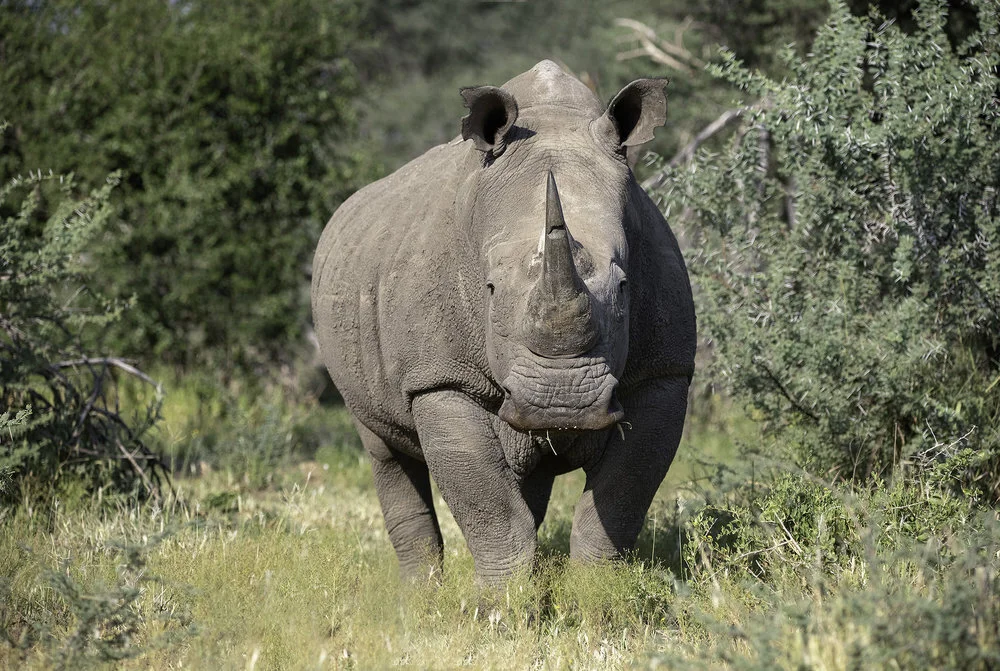
A rhino photographed at eye level from a hide feels completely different from one photographed downward from a vehicle.
The environment matters.
The background matters.
The light matters.
The angle matters.
When comparing safaris, don't just ask what animals you might see.
Ask:
What kinds of photographs can I make there?
That's a much better question.
Kenya, Tanzania, Namibia, South Africa or Zambia?
There isn't one correct answer.
They offer very different photographic experiences.
Kenya
Kenya offers tremendous variety.
The Masai Mara is one of the world's great locations for big cats and classic East African landscapes. Amboseli is extraordinary for elephants, particularly when Kilimanjaro reveals itself. Other regions provide opportunities for rhinos, hides and cultural photography.
If someone wanted one trip combining iconic African wildlife with several distinctly different photographic environments, Kenya would be high on my list.
Tanzania
Tanzania delivers some of Africa's great wildlife spectacles.
The Serengeti, Ngorongoro and surrounding ecosystems offer big cats, enormous herds, dramatic landscapes and seasonal events such as calving.
I've been leading photographers in Tanzania since 2013, and one of its strengths is the ability to build an itinerary around wildlife behaviour at particular times of year.
Timing matters enormously here.
Namibia
Namibia is different.
Wildlife can be part of the experience, particularly around Etosha and private reserves, but Namibia's greatest strength for me is diversity.
One day you might photograph wildlife.
Another you're standing among the dunes at Deadvlei.
Then you're inside the abandoned buildings of Kolmanskop.
Then photographing the Milky Way at Spitzkoppe.
Namibia is a particularly good choice for photographers who want to return home with a portfolio that extends far beyond wildlife.
South Africa
South Africa can provide photographic opportunities that are difficult to reproduce elsewhere.
Purpose-built photographic hides can put you at eye level with elephants, rhinos, birds and other wildlife.
Some locations offer overnight hides, allowing photographers to work through changing light and nocturnal activity.
For photographers who enjoy controlled positions, low angles and intimate wildlife photography, this can be exceptional.
Zambia
Zambia feels different again.
South Luangwa is particularly well known for leopards and wild dogs, and certain areas can offer a quieter safari experience than some of Africa's most famous reserves.
For photographers who have already experienced East Africa—or those who want something less familiar—Zambia deserves serious consideration.
The point isn't that one country is better.
The question is:
Which one best matches the photographs you want to make?
Timing Is More Important Than Most People Realize
Don't simply search:
Best time to visit Africa.
Search:
Best time for the photography I want to do.
Those can produce very different answers.
Wildlife behaviour changes throughout the year.
Rain changes landscapes.
Vegetation changes backgrounds.
Animals congregate around water during certain periods.
Migration patterns change.
Babies are born.
Birds arrive.
Dust creates atmosphere.
Storms create dramatic skies.
The most comfortable time to visit isn't necessarily the most interesting time to photograph.
When I'm planning a safari, I'm thinking about the photographic possibilities of the season—not simply whether the weather forecast says sunshine.
Consider the Light
This sounds obvious, but it's worth investigating before booking.
When does your safari leave camp?
When do you return?
Are you able to be in productive areas around sunrise and sunset?
Are there restrictions on when vehicles can operate?
Does the lodge schedule breakfast during the best morning light?
That last one sounds ridiculous.
It isn't.
Traditional safari schedules are sometimes designed around guests returning for breakfast.
Photographers may want to stay out.
I've happily eaten plenty of late breakfasts because something interesting was happening in good light.
Breakfast will still be there.
The leopard may not.
Private Vehicles Are Worth Considering
For photographers, private vehicles can completely change a safari.
If you're sharing with regular safari guests, everyone has different priorities.
Someone wants to see giraffes.
Someone hasn't seen a zebra.
Someone wants to return to the lodge.
You want to spend another hour watching a sleeping lion.
Nobody is wrong.
They simply want different experiences.
A private photography vehicle means decisions can be made around photography.
We can stay.
We can move.
We can reposition.
We can wait for light.
We can spend forty minutes photographing one elephant if the situation is good.
That freedom has real value.
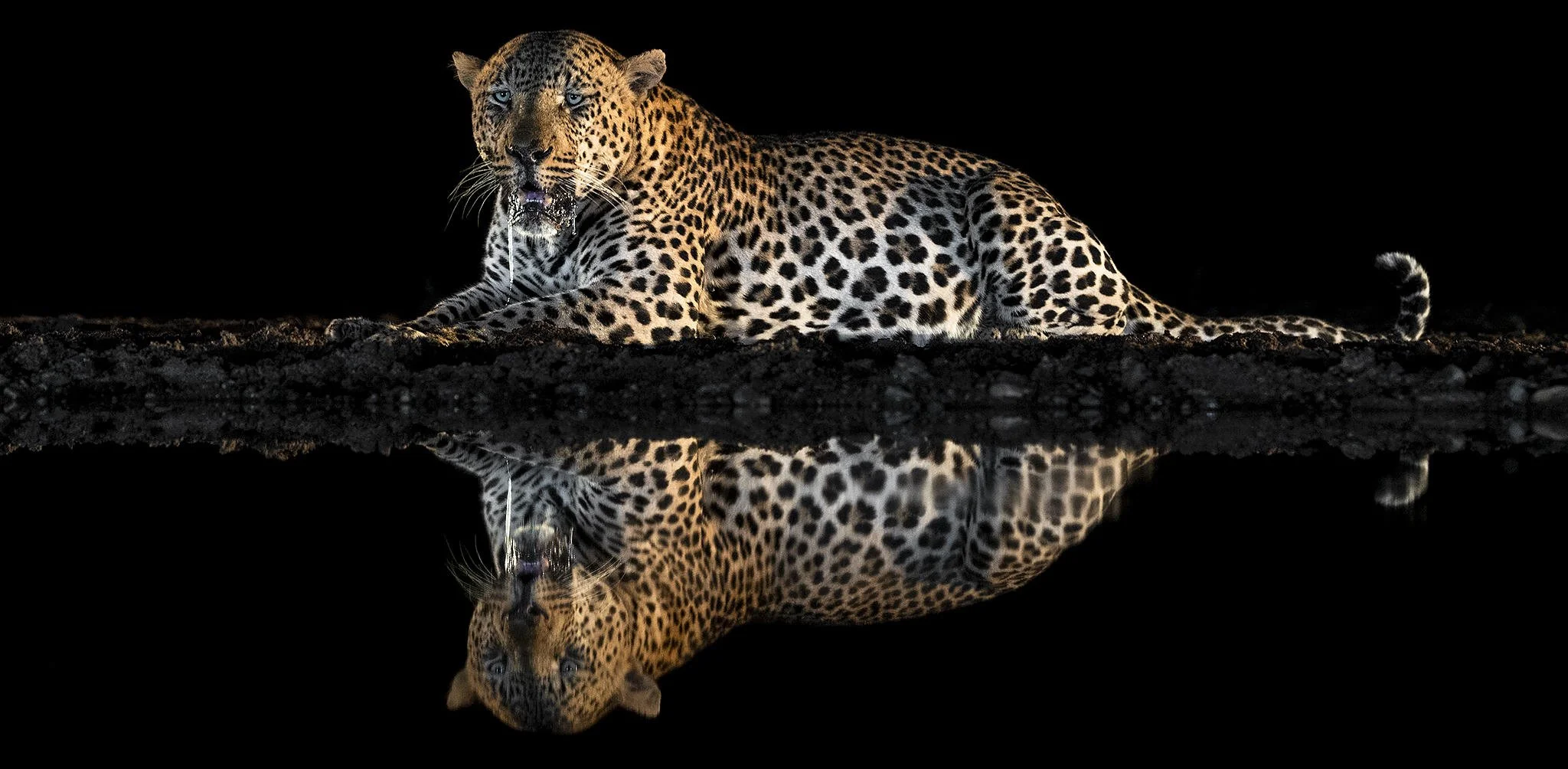
Photographic Hides Can Change Your Perspective
Hides have become an important part of some African photography experiences.
They offer something vehicles often can't:
Eye-level photography.
Instead of photographing downward from a vehicle, you may be positioned near ground or water level.
That changes everything.
Backgrounds become cleaner.
Animals feel larger.
Reflections become possible.
The photographs become more intimate.
Hides can also allow wildlife to approach naturally while photographers remain concealed.
If hides are part of a safari, ask about their design.
How many photographers do they hold?
What height are the openings?
What direction does the light come from?
What lenses work best?
Are they daytime or overnight hides?
Again, the details matter.
Accommodation Matters—But Maybe Not for the Reason You Think
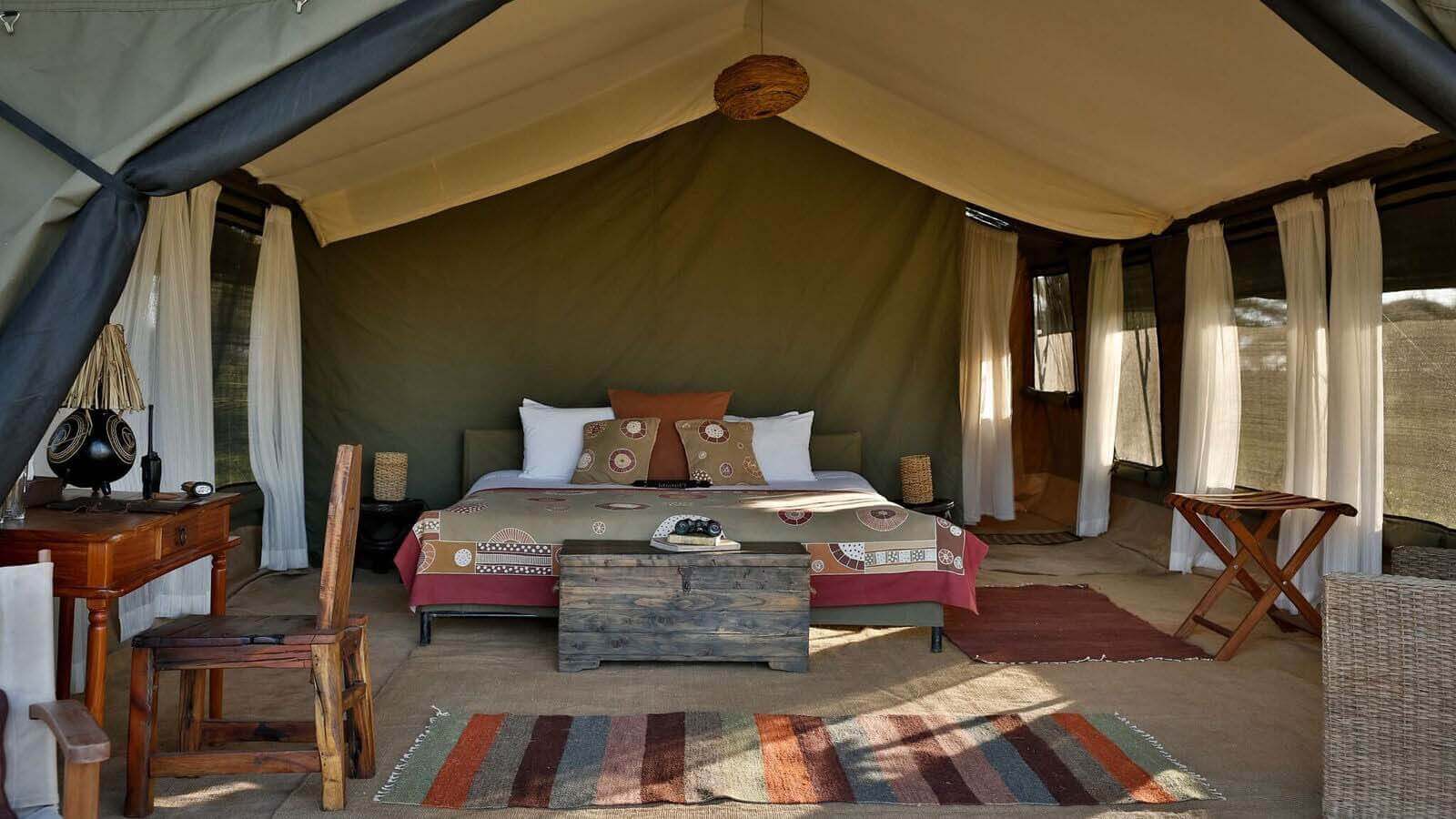
I enjoy a beautiful lodge as much as anyone.
After twelve hours in a safari vehicle, a comfortable bed and good meal are very welcome.
But I wouldn't choose a photography safari because the lodge has the nicest swimming pool.
I care more about location.
How long does it take to reach productive wildlife areas?
Are we inside or outside the reserve?
How much time is lost driving from the lodge?
Can we leave early enough?
Can we stay late enough?
Sometimes the more photographically useful accommodation isn't the fanciest option.
You're travelling to photograph Africa.
The lodge should help you do that.
Ask What Happens When the Plan Changes
Africa doesn't care about your itinerary.
Wildlife moves.
Roads change.
Weather changes.
Sightings change.
A location that was productive yesterday may be quiet today.
This is where experienced local guides and workshop leaders become valuable.
A photography itinerary should have structure.
But it also needs flexibility.
If we've planned to leave an area at 9:00 and a leopard starts hunting at 8:55, I don't want to hear:
"Sorry, the itinerary says we leave now."
Plans are important.
Photographs are often better when we're willing to change them.
Don't Forget About Instruction
Not every photographer needs the same amount of help.
Some photographers joining a safari may still be learning autofocus and exposure.
Others have decades of experience.
A good photography workshop should accommodate both.
Instruction might include:
Camera settings.
Autofocus techniques.
Shutter speed.
Exposure.
Composition.
Using light.
Anticipating behaviour.
Long-lens technique.
Environmental wildlife photography.
Panning.
Low-light photography.
Editing and post-processing.
But I don't believe instruction should feel like a classroom following you around Africa.
The best teaching often happens when something is unfolding in front of us.
That's when advice becomes immediately useful.
Ask Whether the Workshop Leader Will Actually Be Teaching
This is worth asking.
There's a difference between travelling with a photographer and being taught by one.
Look at reviews.
Talk to previous clients.
Ask how the leader operates in the field.
Do they photograph constantly?
Do they move around the vehicle helping people?
Do they review images?
Do they help with settings?
Do they notice when someone is struggling?
There's nothing wrong with a workshop leader making photographs.
I still photograph on workshops.
But I've always believed something very simple:
When I'm leading a workshop, your photographs are more important than mine.
Think About the Entire Portfolio
One of my favourite questions when designing a photography safari is:
What will the photographer's portfolio look like when the trip is finished?
I don't want every image to be a tight portrait of an animal.
I want variety.
Animals in landscapes.
Behaviour.
Action.
Portraits.
Silhouettes.
Backlighting.
Dust.
Storms.
Reflections.
Details.
Wide scenes.
Close encounters.
Perhaps cultural photography.
Maybe night photography.
A strong safari should give you opportunities to tell a broader story about the place.
When comparing itineraries, imagine the photographs—not simply the destinations.
Questions I Would Ask Before Booking an African Photography Safari
Before spending thousands of dollars, I would want answers to these questions:
How many photographers are on the safari?
How many photographers are in each vehicle?
Does everyone have their own row or shooting position?
Are the vehicles private to the photography group?
Who are the local guides?
Has the photography leader been there before?
How much teaching happens in the field?
Are beanbags or other supports provided?
Can the itinerary change when photographic opportunities arise?
Are accommodations selected partly for their photographic location?
Are hides included?
What wildlife is most likely during that specific season?
How much time is spent transferring between locations?
Are sunrise and sunset prioritized?
And finally:
How many clients have travelled with this company or photographer more than once?
Repeat clients are one of the strongest endorsements a photography workshop can have.
So, How Do You Choose the Right African Photography Safari?
Start with the photographs you want to make.
Then work backwards.
Find the destinations that provide those opportunities.
Look at the season.
Look at the vehicles.
Look at the number of photographers.
Look at the local guides.
Look at the workshop leader.
Look at how much of the itinerary has genuinely been designed around photography.
Don't automatically choose the safari that visits the most locations or promises the longest wildlife list.
Sometimes the better photography experience is the one that does less—but gives you more time to do it well.
After years of leading photographers across Africa, I've learned that successful wildlife photography rarely comes from rushing.
It comes from preparation.
Position.
Light.
Patience.
Good people.
And sometimes simply being willing to stay another twenty minutes when everyone else has driven away.
That's the kind of African safari I'd choose.
Photograph Africa With Me
I've been leading photography workshops in Africa since 2013, and it remains one of the places I most look forward to returning to.
Today I lead small-group photography safaris through Akari Photo Tours in destinations including Kenya, Namibia, South Africa and Zambia.
Each offers something very different.
If you're considering an African photography safari, you can see the workshops I'm currently scheduled to lead, along with itineraries, dates, group sizes and availability.