What Another Namibia Workshop Reminded Me About Why Experience Matters
I just returned from leading another photography workshop through Namibia, and once again I came home thinking about how different this country becomes when you know it well.
Namibia has been one of the cornerstone workshops in our program for years, and there is a reason for that.
It gives photographers an extraordinary amount of variety.
In one trip, we can photograph towering desert dunes, abandoned buildings slowly being reclaimed by sand, wildlife, remote cultural experiences, dramatic coastlines and some of the darkest night skies most photographers will ever see.
But Namibia has also taught me something else.
A great itinerary isn't simply a list of great locations.
The real difference comes from knowing how to photograph those locations.
When to arrive.
Where to stand.
How much time to allow.
Where to stay.
Who to work with.
When to change the plan.
And how many photographers you bring with you.
After returning from another workshop, those details stood out to me more than ever.
Deadvlei Is Famous for a Reason
Most photographers travelling to Namibia have seen photographs of Deadvlei long before they arrive.
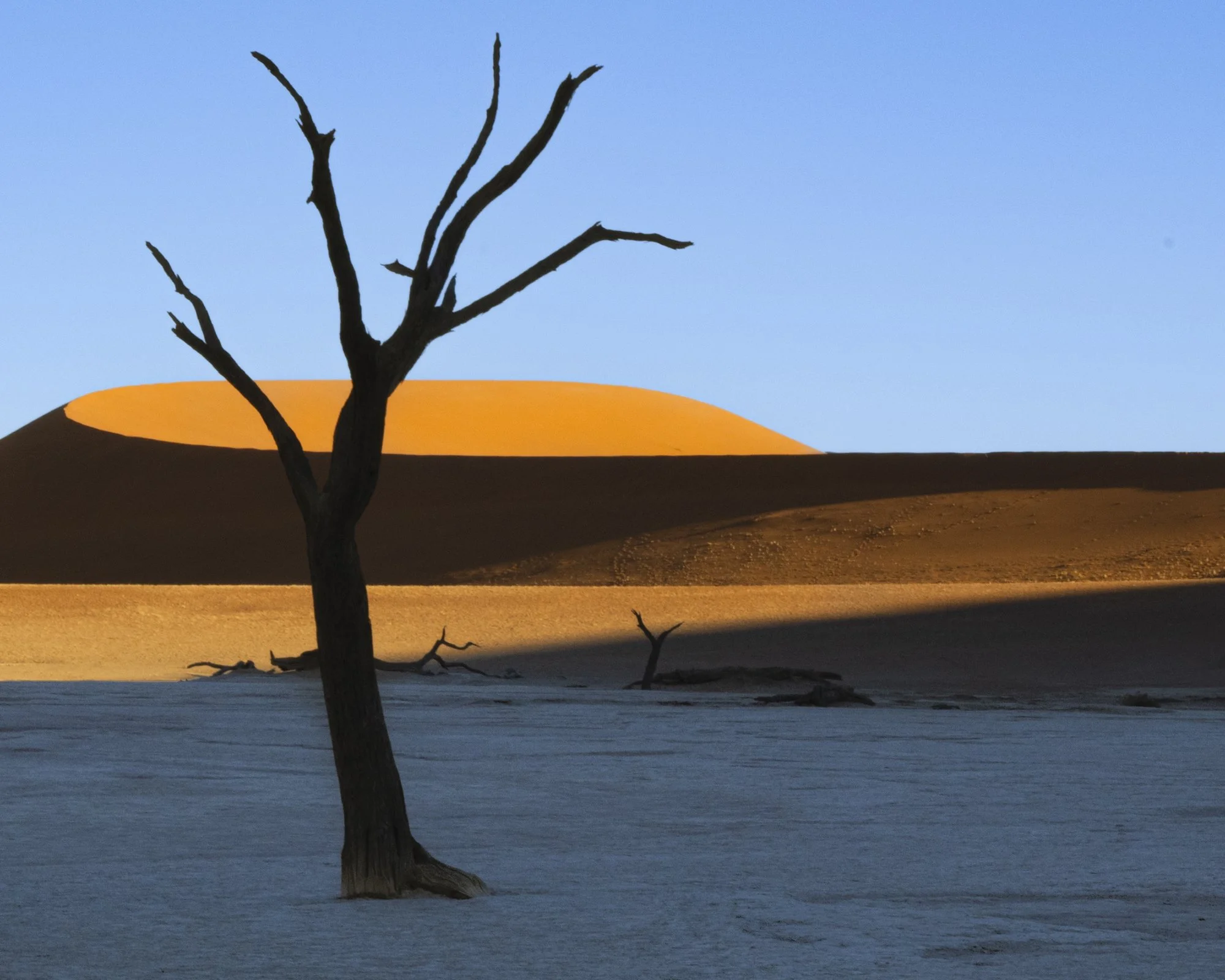
The dead camel thorn trees.
The white clay pan.
The enormous red dunes surrounding them.
It is one of Namibia's iconic landscapes.
But simply getting to Deadvlei doesn't guarantee a great photograph.
Light changes the location completely.
As the sun rises, light begins creeping across the dunes and eventually reaches the clay pan and trees.
Minutes matter.
Where you position yourself matters.
Which trees you choose matters.
Lens choice matters.
And understanding how the shadows will move across the scene matters.
I've photographed Deadvlei many times, and every visit teaches me something.
There are the obvious compositions everyone wants.
We make those.
But then I want photographers to start looking harder.
Different trees.
Longer lenses.
Details.
Patterns.
Light hitting one section of dune.
The relationship between shadow and colour.
Experience doesn't mean we know exactly what photograph we're going to make.
It means we understand the location well enough to recognize opportunities as they develop.
Sossusvlei Is More Than One Famous Photograph
Sossusvlei is another place where it's easy to become fixated on a checklist.
Big Daddy.
Deadvlei.
The red dunes.
Done.
But photographically, there is much more going on.
The dunes change constantly as the sun moves across them.
One side glows.
The other disappears into shadow.
Wind changes the surface.
Clouds alter the colour.
Small shifts in position create completely different relationships between the dunes.
This is where time becomes important.
If you're racing through Namibia trying to photograph every location in a few days, you start collecting places instead of photographs.
We try to do the opposite.
We want enough time to work.
Kolmanskop Is Where Group Size Becomes Very Real
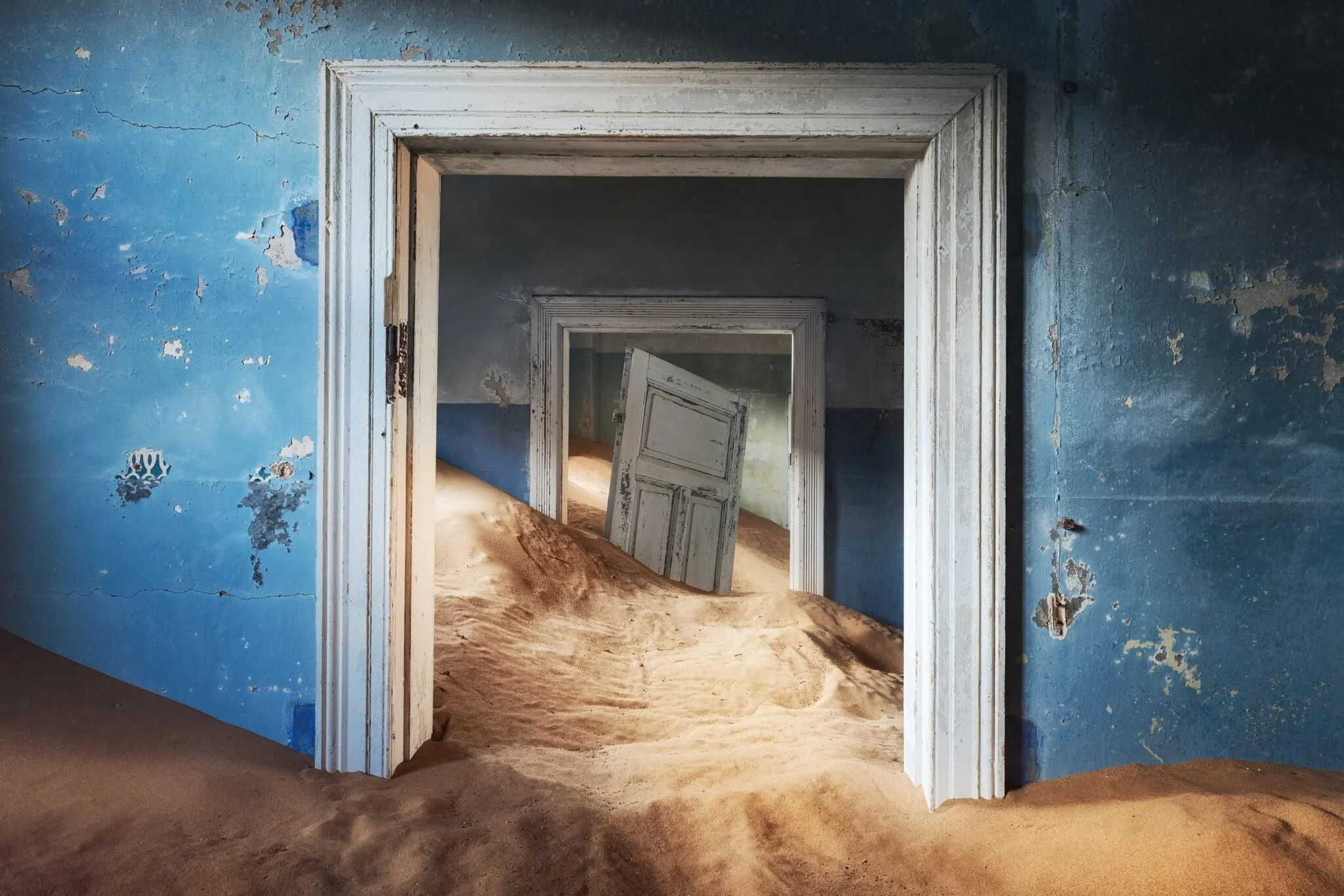
If anyone ever asks me why I care so much about small photography groups, I could probably explain it by taking them into one room at Kolmanskop.
Kolmanskop is extraordinary.
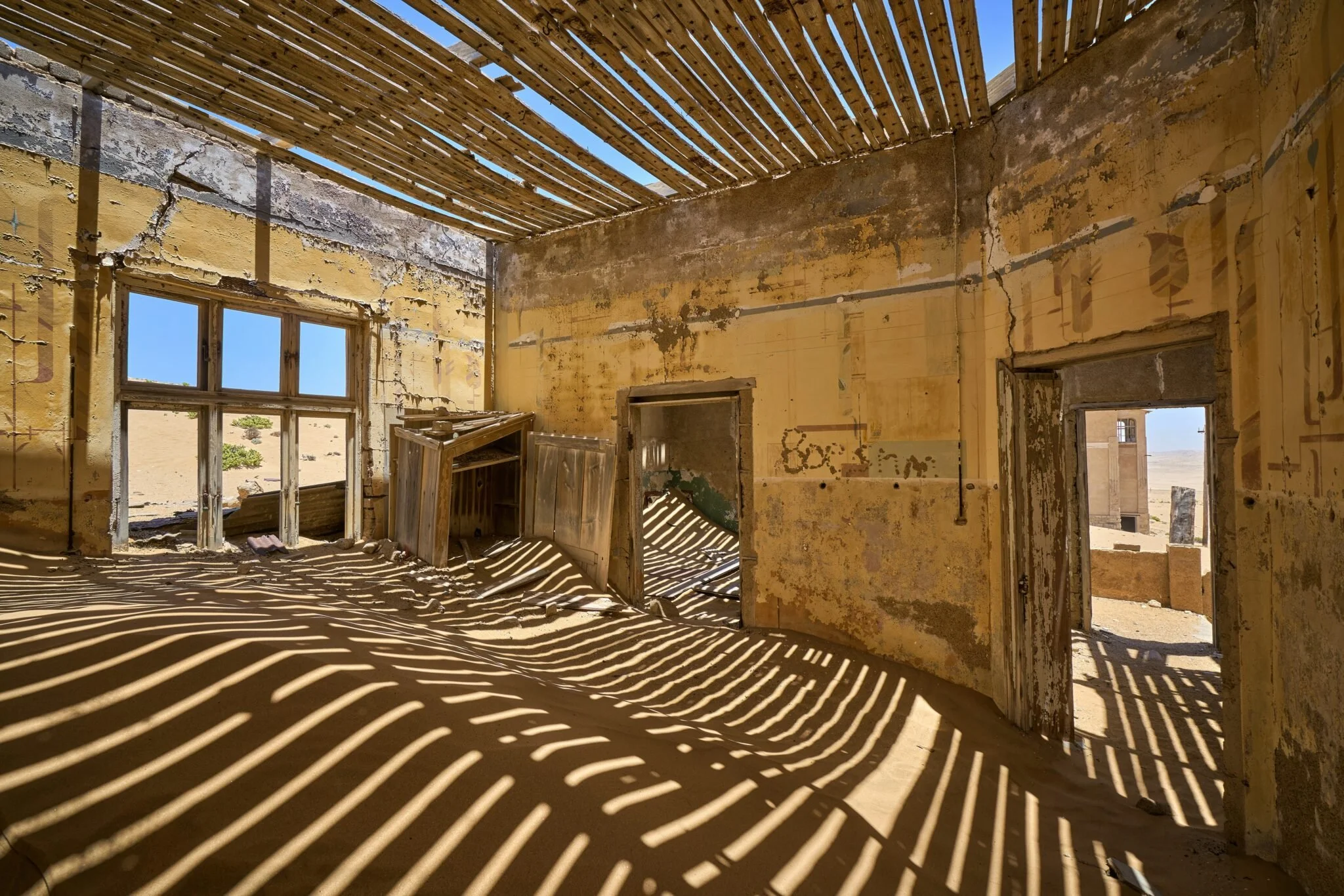
The abandoned buildings of this former diamond-mining town are slowly filling with desert sand.
Doors, windows, peeling wallpaper, hallways and rooms create endless compositions.
Then the light starts coming through.
That's when the difference between a group of five photographers and a group of ten becomes obvious.
A photography workshop might advertise two instructors for ten guests and suggest that's an excellent instructor-to-student ratio.
On paper, maybe it is.
But when ten photographers are standing inside a small room and the best light begins pouring through one doorway, there are still ten photographers trying to make the photograph.
Two instructors don't make the room larger.
They don't create additional shooting positions.
They don't stop tripods from getting into photographs.
They don't give everyone more room to move.
This is why I care more about total group size than instructor ratio.
In places like Kolmanskop, smaller groups simply work better.
You have room to compose.
You can move your tripod.
You can change lenses.
You can wait for someone else to finish and then take your turn without feeling like the moment is disappearing.
The experience is calmer.
And, in my opinion, the photographs are better.
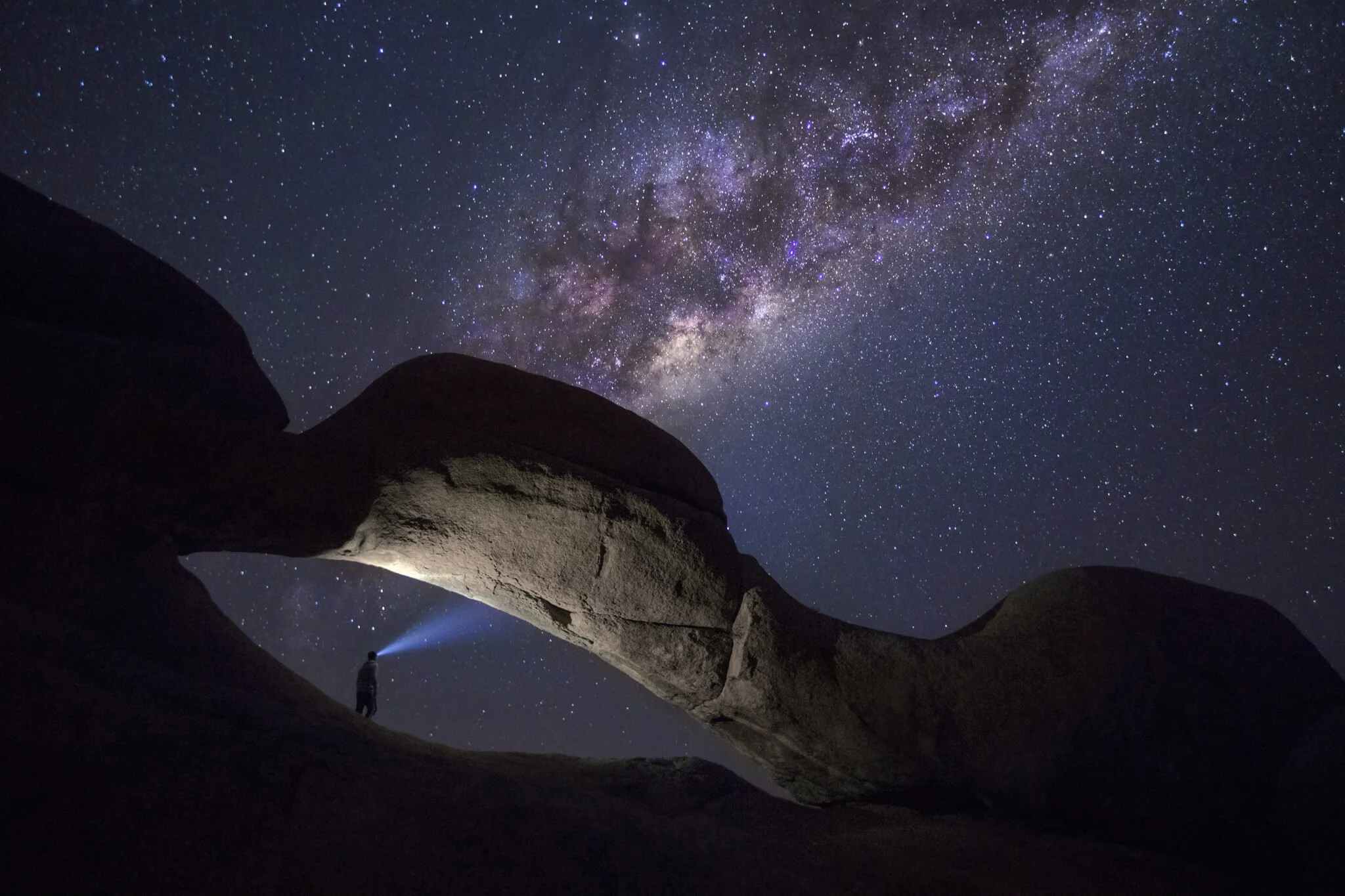
Spitzkoppe Makes the Same Point After Dark
The same lesson applies at Spitzkoppe.
Spitzkoppe is one of my favourite night photography locations in Namibia.
The granite peaks rise dramatically from the desert, and when conditions line up, the Milky Way gives us an incredible backdrop.
But night photography requires space.
Tripods are spread out.
Compositions are carefully positioned.
Photographers may be working with foreground light, star tracking or long exposures.
Now imagine ten people trying to work from the same ideal location.
Someone is always walking through somebody else's frame.
Tripods overlap.
People are pushed toward weaker compositions.
Flashlights accidentally ruin exposures.
With a small group, photographers have room.
We can put one person here.
Another twenty feet away.
Someone else works a vertical composition.
Another uses a wider lens.
Everyone can experiment.
That freedom matters.
This is why our Namibia groups have remained intentionally small, even though increasing the number of guests would make the trip more profitable.
There are workshops where bigger groups can work.
Namibia isn't one of them.
The Quiver Tree Forest Rewards Time
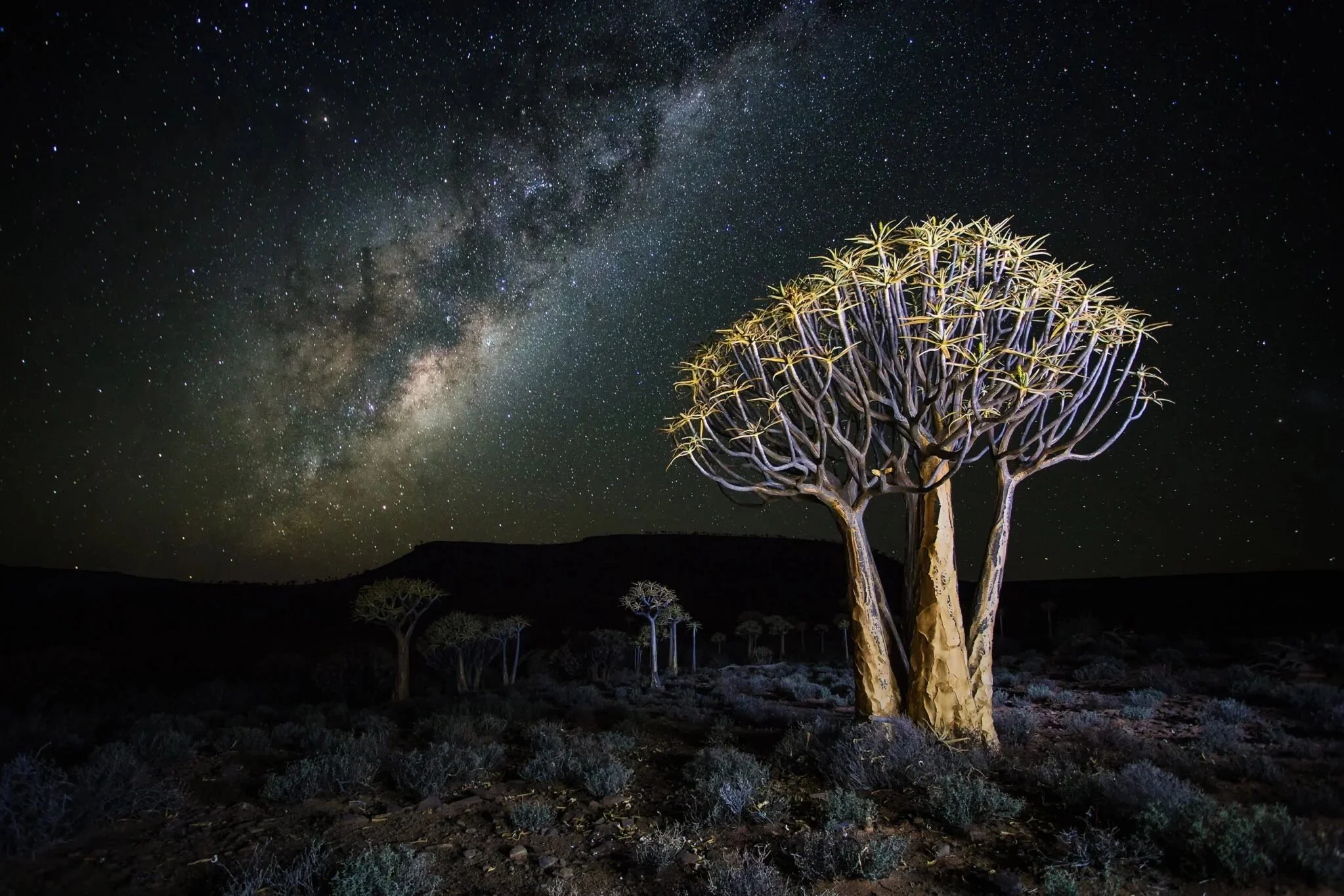
The Quiver Tree Forest is another location where familiarity helps.
It looks very different depending on the light.
Late-day colour.
Silhouettes.
Blue hour.
Stars.
Milky Way.
The trees themselves create endless foreground possibilities.
On a first visit, it's very easy to become overwhelmed by choices.
Which tree?
Which direction?
What foreground?
What lens?
Where will the Milky Way appear?
We've photographed there enough times to help photographers move through those decisions much faster.
That doesn't mean telling everyone to stand in the same place and take the same photograph.
Exactly the opposite.
The goal is to help people understand the location so they can find their own compositions.
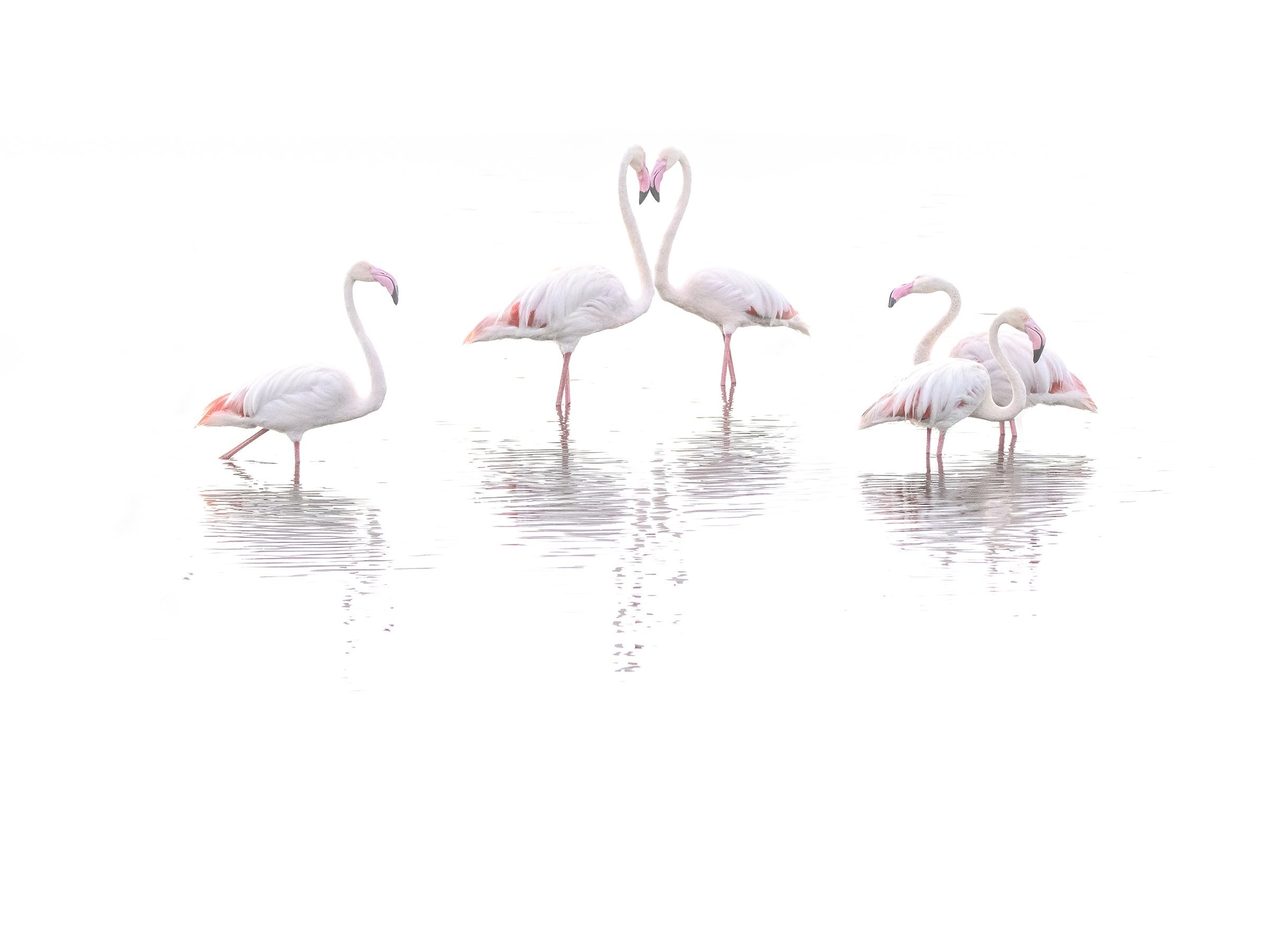
Sandwich Harbour Is Controlled Chaos—in a Good Way
Then there is Sandwich Harbour.
Driving through the dunes along Namibia's Atlantic coast is one of those experiences that photographs don't really prepare you for.
Massive dunes drop toward the ocean.
Light moves across the sand.
Patterns appear and disappear as the vehicles climb and descend.
And the drive itself is part of the experience.
It's not simply a matter of arriving at one viewpoint.
The photography develops along the way.
We stop when the light is right.
We look for layers.
Curves.
Patterns.
Scale.
Vehicles against the dunes.
Ocean against sand.
Late light can completely transform the landscape.
A guide who understands photographers matters here.
You don't want someone whose only objective is getting from Point A to Point B.
You want someone watching the light and understanding that sometimes the best decision is to stop the vehicle and give photographers time to work.
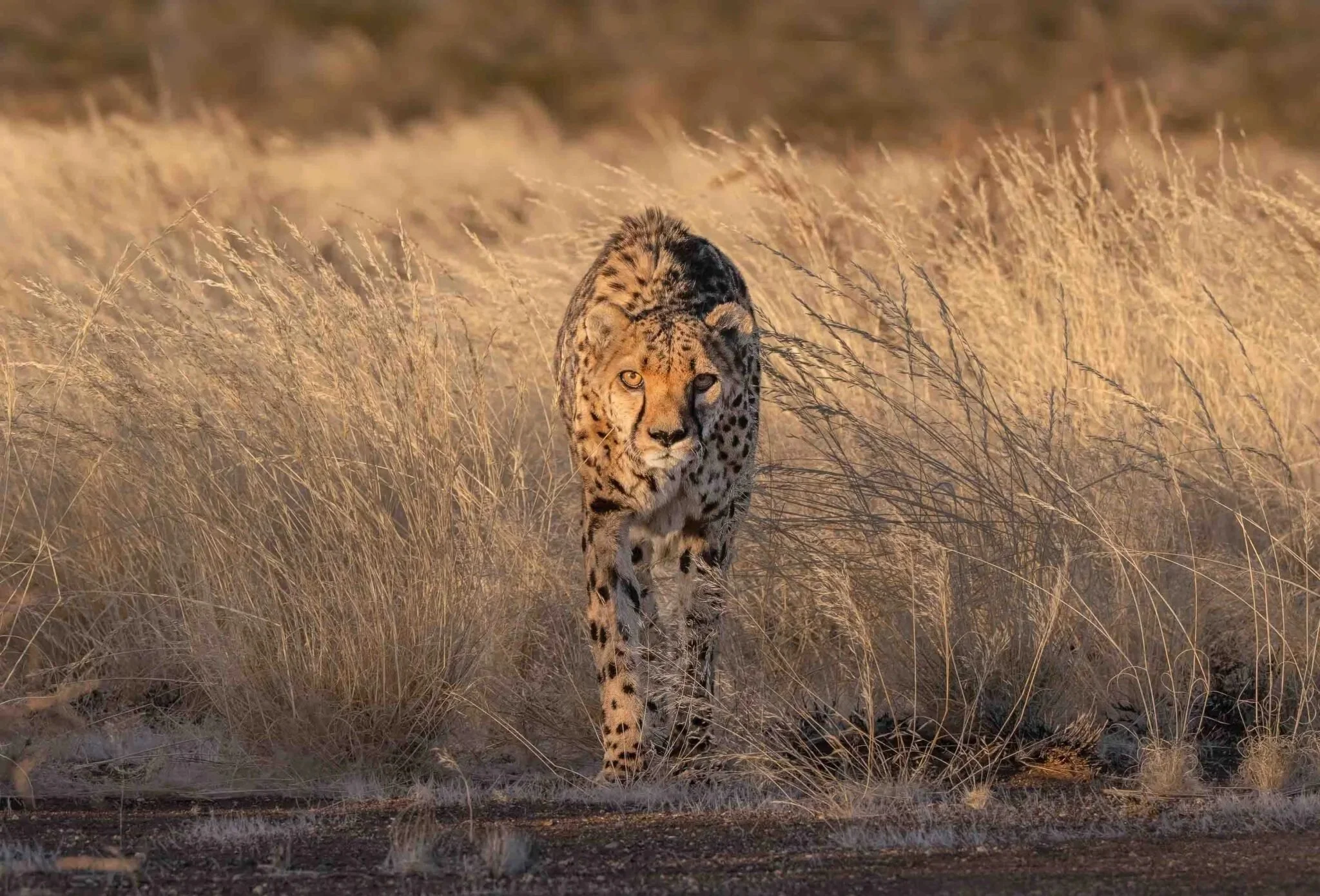
Etosha Is About Position, Patience and Wildlife Behaviour
Namibia isn't only landscapes.
Etosha adds an entirely different photographic experience.
Wildlife around waterholes can create incredible opportunities, but again, seeing animals and photographing them well are not always the same thing.
Where is the light?
What's behind the animal?
Is another animal approaching?
Should we move?
Should we stay?
Can we position ourselves for interaction instead of a static portrait?
A great wildlife photograph often develops because someone recognizes what might happen next.
That's where experienced local guides become invaluable.

Ongava Gives Us Something Different Again
Ongava brings another dimension to the workshop.
The private reserve gives us wildlife opportunities that complement Etosha, but one of the experiences I value most is getting photographers closer to the environment itself.
Walking in this landscape changes your perspective.
You're no longer simply photographing Africa from a vehicle.
You're experiencing it at ground level.
That also affects how you think photographically.
Distances feel different.
Animal tracks mean more.
The scale of the landscape becomes more obvious.
And when the opportunity exists to photograph wildlife such as rhinos in these environments, the experience feels very different from simply driving up to a sighting.

Photographing the Himba Is About More Than Portraits
Our time with the Himba is another part of Namibia that I think benefits enormously from experience and relationships.
Cultural photography isn't simply about finding someone interesting and pointing a camera at them.
The photographs become better when there is time.
Conversation.
Understanding.
Trust.
We work with people who know the communities and understand how to create an experience that is respectful for everyone involved.
We spend time looking at light.
Backgrounds.
Where people naturally position themselves.
How the environment can become part of the photograph.
And importantly, we try not to rush.
Some of the strongest cultural images I've made have come after the camera has been put down for a while.
The conversation often matters as much as the photography.
Where We Stay Is Part of the Photography Plan
Accommodation on a photography workshop shouldn't be chosen simply because it looks impressive on a website.
Location matters.
A lot.
Where we sleep determines what time we can reach a photographic location.
How far we need to drive.
Whether we're close enough to work sunrise and sunset properly.
Whether we can return during the middle of the day and head back out later.
Whether we're wasting good light sitting in a vehicle travelling between locations.
Over the years, we've refined the Namibia itinerary partly by refining where we stay.
Comfort matters.
After long days in the field, everyone appreciates a good room, a good meal and a place to recharge.
But I don't want luxury at the expense of photography.
The best accommodation for a photography workshop is accommodation that helps us photograph better.
And Then There's Mr T
A Namibia workshop is also a reminder that a great trip depends heavily on the people on the ground.
Mr T has become an important part of our Namibia experience.
He isn't simply getting us from one destination to another.
He understands the rhythm of the workshop.
He knows when photographers need more time.
He knows the roads, history and logistics.
He helps with luggage.
He helps keep us organized.
He watches what's happening.
He understands when the plan needs to adjust.
And somewhere along the road there is usually a story, some laughter or a song.
Those things don't show up on an itinerary.
But they matter.
A workshop company can design the best itinerary in the world.
If the people executing it don't understand photographers, the experience suffers.
I've learned over the years to value great local partners every bit as much as great locations.
Experience Lets Us Solve Problems Before Our Guests See Them
This may be the biggest advantage of returning to Namibia again and again.
Experience isn't about bragging that we've been somewhere before.
It's about eliminating problems.
We've learned which locations need more time.
Which ones work with smaller groups.
Where we want to stay.
How much driving is realistic.
What lenses photographers actually use.
How dust affects equipment.
What moon phases work for night photography.
When sunrise matters.
When we can slow down.
When we need to move quickly.
And what parts of the itinerary should never be rushed.
We've also learned from mistakes.
Every workshop leader does.
The difference is whether you take those lessons and improve the next trip.
That's one reason our Namibia workshop continues to evolve.
We're always asking:
How can we make this better for the photographer?
Why We Continue to Keep the Group Small
From a business perspective, adding more photographers would be easy.
More guests create more revenue.
That's tempting for any workshop company.
But then I walk back into Kolmanskop.
Or stand beneath the stars at Spitzkoppe.
Or look inside the safari vehicle.
And I'm reminded why we don't.
Our clients have travelled a long way.
They've invested a significant amount of money.
They want to create bucket-list photographs.
They deserve enough room to do it.
I would rather operate with a smaller group and provide the experience I believe in than increase the numbers and compromise the photography.
That has become one of the guiding principles behind how we design workshops.
The important ratio isn't always instructors to students.
Sometimes the most important number is simply:
How many photographers are standing beside you when the light gets good?
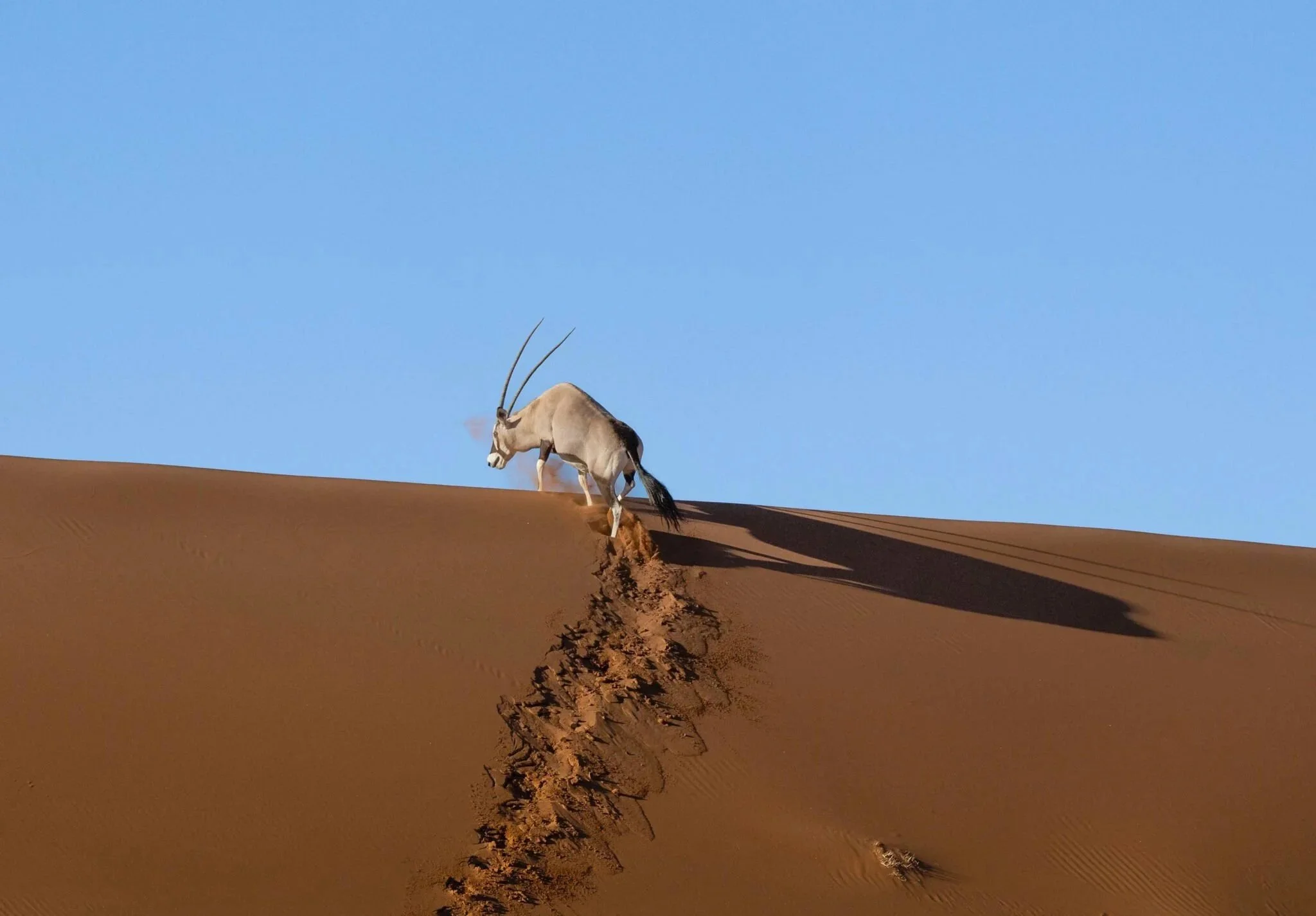
Namibia Is One of Our Cornerstone Workshops
There are destinations we offer because they're extraordinary places to photograph.
And then there are destinations that become part of who you are as a workshop company.
Namibia has become one of those places for us.
We've spent years refining this itinerary.
Deadvlei.
Sossusvlei.
Kolmanskop.
The Quiver Tree Forest.
Spitzkoppe.
Sandwich Harbour.
Etosha.
Ongava.
Himba communities.
Wildlife.
Landscapes.
Culture.
Night skies.
Few destinations give photographers that kind of variety in one journey.
But the locations alone aren't why I think our Namibia workshop is special.
It's the experience behind them.
Knowing where to go.
Knowing when to arrive.
Knowing when to stay.
Knowing which local people to work with.
Knowing where group size matters.
And knowing that after years of running the trip, there is still something we can improve next time.
That's what experience should do.
What I Came Home Thinking About
After another Namibia workshop, I came home with photographs.
Of course.
But that's not what stayed with me most.
I thought about photographers having enough room inside Kolmanskop.
I thought about everyone finding their own foreground beneath the Milky Way at Spitzkoppe.
I thought about the changing light at Deadvlei.
The drive through the dunes at Sandwich Harbour.
Wildlife in Etosha and Ongava.
Conversations with the Himba.
Long days with Mr T.
And the satisfaction of watching a workshop we've refined for years continue to deliver what we designed it to deliver.
A photography experience built around photographers.
That is why Namibia remains one of the cornerstone workshops at Akari Photo Tours.
We know Namibia.
We've photographed it.
We've led groups through it.
We've made mistakes there.
We've learned from them.
We've built relationships there.
And every time we return, we understand the country—and how to photograph it—a little better.
Photograph Namibia With Me
If Namibia has been on your photography list, I'd encourage you to look beyond the itinerary when comparing workshops.
Ask about the group size.
Ask how many photographers share a vehicle.
Ask where you'll stay.
Ask how much time you have at locations like Kolmanskop and Deadvlei.
Ask whether night photography is built around the moon and Milky Way.
Ask who the local guides are.
And ask how many times the workshop leader has actually been there.
Those details matter.
I lead small-group Namibia photography workshops through Akari Photo Tours, built around years of experience photographing this country.