
Why Join a China Landscape Photography Workshop? Time to See Beyond the Postcard
Some photographs sit in your imagination for years. The Great Wall following a mountain ridge. A fisherman beside a lantern on the Li River. A pine tree growing from what appears to be an impossible crack in a mountain.
China gives us the chance to make those photographs. It also gives us a reason to look beyond them.
That is what I want people to experience on our China Landscapes and Traditions Photo Workshop: the satisfaction of photographing somewhere you have always wanted to visit, followed by the discovery of something you had never thought to look for.
Over 16 days, we travel from Shanghai to Beijing through mountain landscapes, coastal communities, traditional villages, and historic sites. Along the way, we work on the decisions that make a photograph feel like your own.
More time in the places that deserve it
A location can look entirely different between your first visit and your second. Light moves across a ridge. Clouds obscure a distracting background. A reflection appears where there was wind earlier.
Our itinerary includes two nights on Huangshan and three nights in Xiapu. Those stays give us repeated opportunities to photograph, assess what worked, and try another approach.
On Huangshan, granite peaks and pines offer lessons in depth, separation, and scale. A wide lens might show the sweep of the mountains, while a longer lens helps isolate a single tree or a sequence of ridges.
If mist develops, we can work with the layers it reveals. If the sky stays clear, we look for shapes, shadows, and smaller compositions. The weather will have its say. It usually does.
The value of a workshop is having help deciding what to do with the conditions in front of you.
Xiapu teaches you to simplify
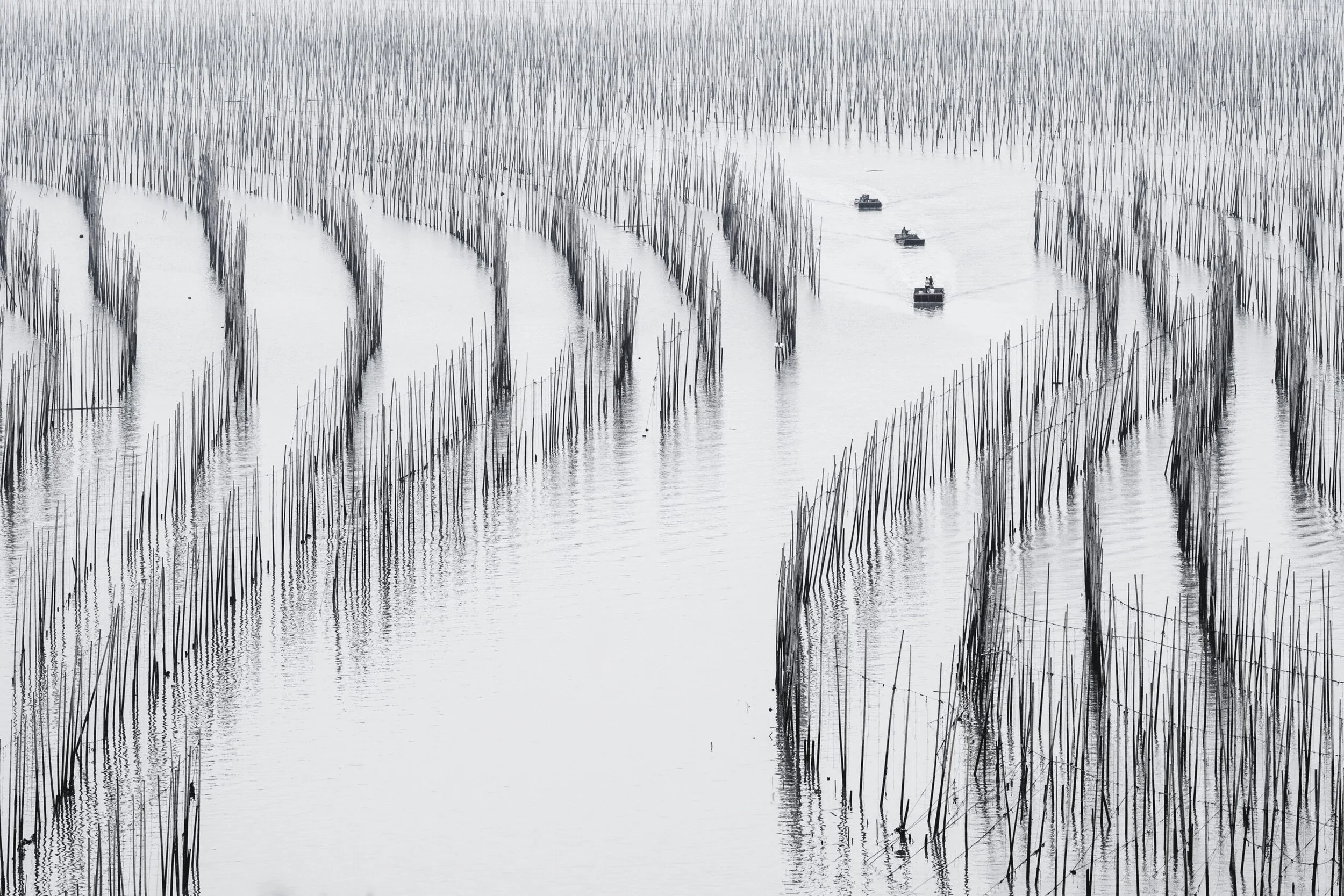
At Xiapu, changing tides alter the patterns across the coastal flats. Boats, fishing structures, reflections, and people can all become part of the photograph.
They can also compete for attention.
This is a useful place to practise deciding what belongs in your frame. A small adjustment in position or a tighter focal length can turn a complicated view into a clear arrangement of lines and shapes.
We have time to explore those choices across several sessions, with locations selected around tides, light, and weather. Some sessions are arranged with local models, while other photographs come from the everyday coastal activity we encounter.
You should leave understanding both how the photograph was made and why the composition works.
Photograph people within the landscape
Around Yangshuo, we photograph the limestone peaks and river scenery, including a private, arranged session with a traditional cormorant fisherman.
The fisherman, bamboo raft, birds, and lantern give us an opportunity to work on environmental portraits: photographs in which the surroundings help tell the subject’s story.
As daylight fades, we will consider how to balance the lantern’s brightness with the remaining light across the river. We will work on subject placement, background separation, and how much of the landscape to include.
This is an arranged photography session, and I describe it that way. Its value is the time it gives us to make considered photographs and learn from the process.
Experience China’s history with your camera
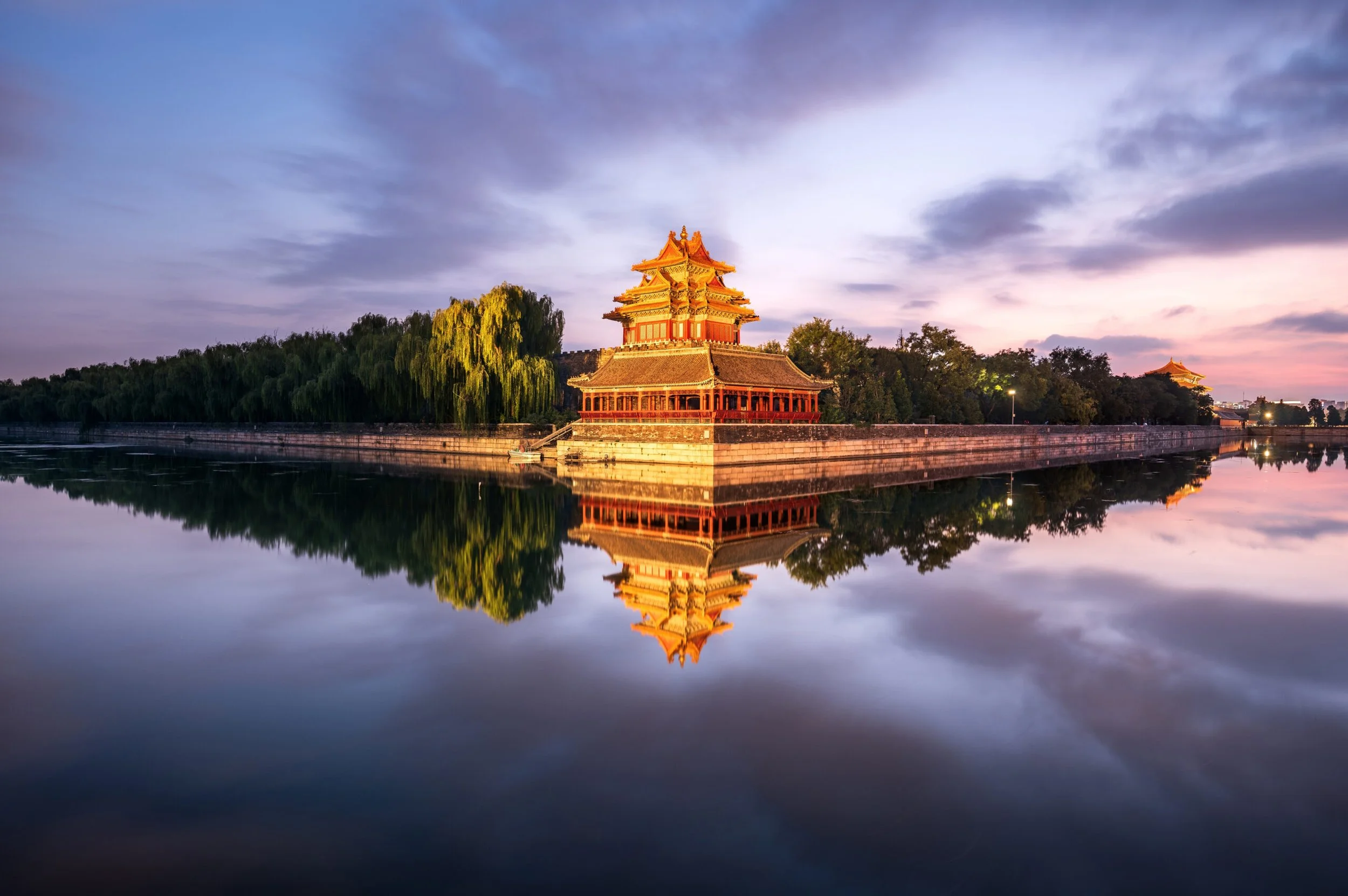
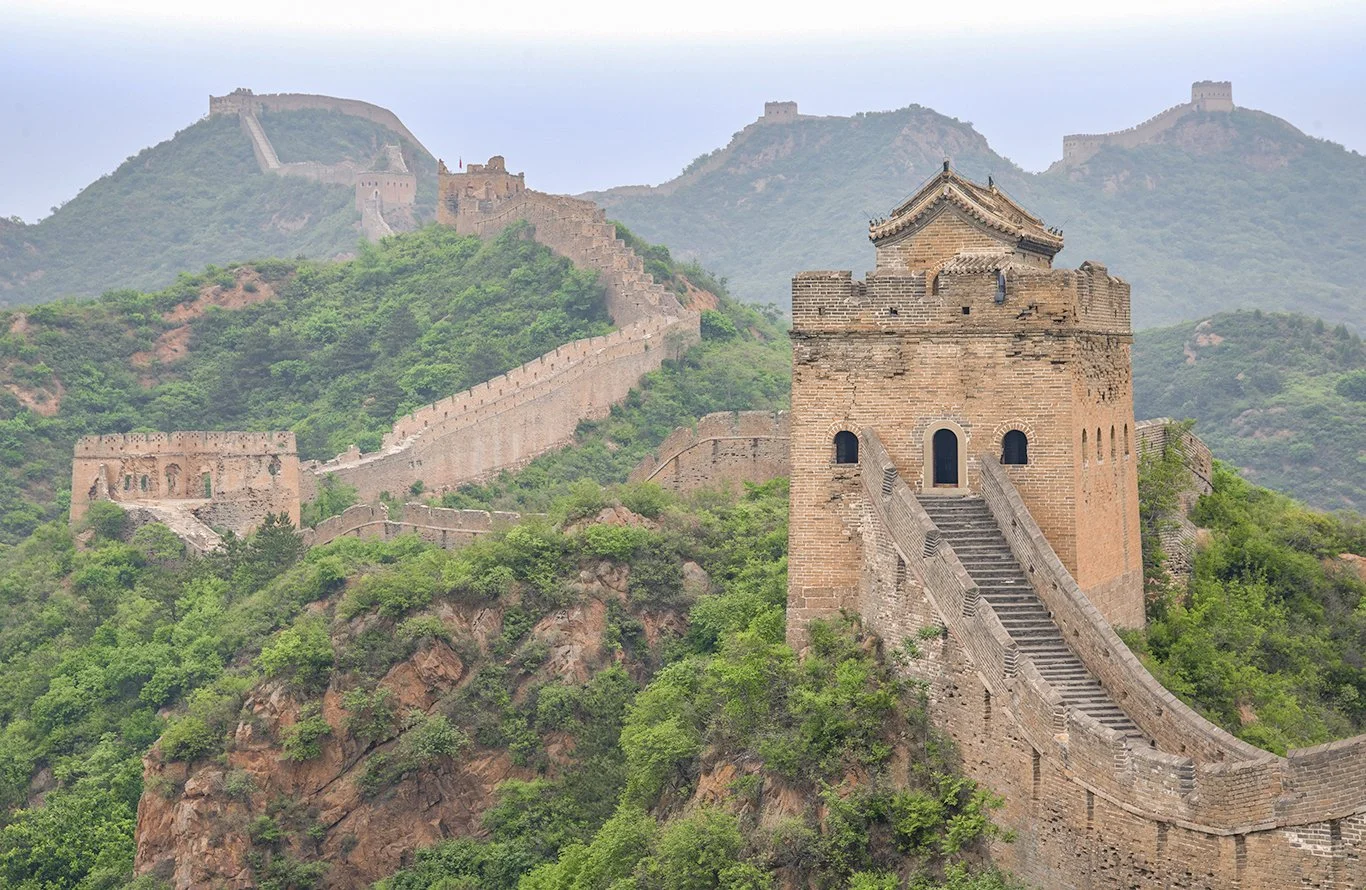
Our route also includes Hongcun, Hangzhou’s West Lake, Xi’an’s Terracotta Warriors, and Beijing’s imperial sites. At Jinshanling, we plan both sunset and sunrise photography on the Great Wall.
Each setting asks you to see differently.
The wall offers leading lines and layered mountain views. Hongcun encourages you to notice reflections, doorways, and the relationships between buildings. Beijing’s courtyards and rooflines invite attention to symmetry, colour, and detail.
At busy historic sites, the lesson may be finding a clear composition from a public viewing area. At the Terracotta Warriors, it may be adapting your handheld technique to indoor light.
These are skills you can use long after you return home.
Why travel with me?
My travels in China began in 2016, and my local guide Michael and I have led photography groups together there since 2018. That working relationship helps us connect local knowledge with the needs of photographers.
You will have guidance in the field, image reviews, and a personal pre-trip consultation. My priority is helping you make photographs you are proud of, whether that means explaining a camera setting or helping you recognise a stronger composition.
We also organise the accommodation and travel between locations. Having those arrangements in place gives you more room to enjoy where you are.
There is walking involved, including mountain paths and steep, uneven steps. On a full Huangshan day, expect roughly two to three miles, broken into sessions. Being comfortable carrying your camera equipment on stairs will help you enjoy the experience.
Come home with photographs that mean something to you
This workshop is for photographers who enjoy landscapes, people, architecture, and the connections between them.
You might arrive thinking most about the Great Wall. You may leave just as pleased with a reflection in a village pond or a small boat surrounded by the patterns of a tidal flat.
I would love to help you find those photographs.